
10 Best Boxy Cars: Time to Get Square
Boxes are back, and they never really should have left. A right angle gives you more headroom, better visibility, easier parking and a shape that ages instead of dating. Here are ten squared-off cars worth caring about, three you can still buy new, and the ones you will have to go hunting for.
Updated: August 19, 2026 // Top Lists
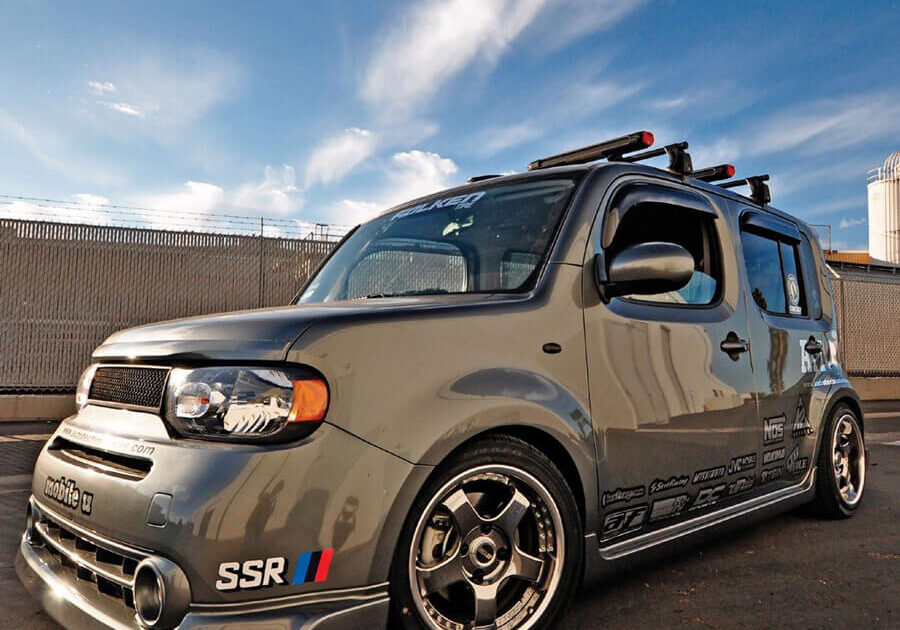
The industry spent two decades rounding everything off in the name of aerodynamics, and the result was a parking lot where every car looked like the same bar of soap in a different colour. Then the boxes came back, and it turns out people missed them.
There is a practical reason. A vertical windscreen and flat sides give you interior volume that a swooping roofline throws away, plus glass you can actually see out of. The tradeoff is drag, which costs fuel. That is the whole argument, and for a lot of buyers the box wins it.
A note on what follows: several of these are out of production. Where that is true, it is flagged, because a list of boxy cars that quietly implies you can go and buy a Honda Element tomorrow is not much use.
Still on sale
10. Jeep Wrangler
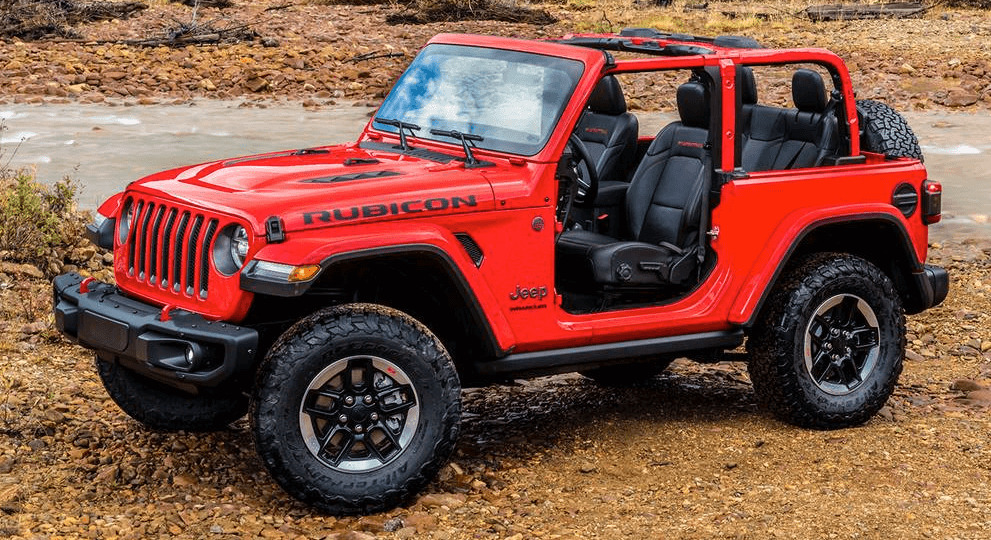
The Wrangler nameplate arrived in 1986, and the shape traces back through the CJ to the original wartime Jeep. Almost nothing about the silhouette has changed in eighty years, which is either stubbornness or the most successful design in automotive history depending on your mood.
The box is functional here. Flat panels and short overhangs give you the approach and departure angles that make it work off road, the doors and roof come off, and the windscreen folds flat. It is a genuinely bad car on a highway and nobody who buys one cares. Our Wrangler review covers what living with one is actually like.
9. Mercedes-Benz G-Class
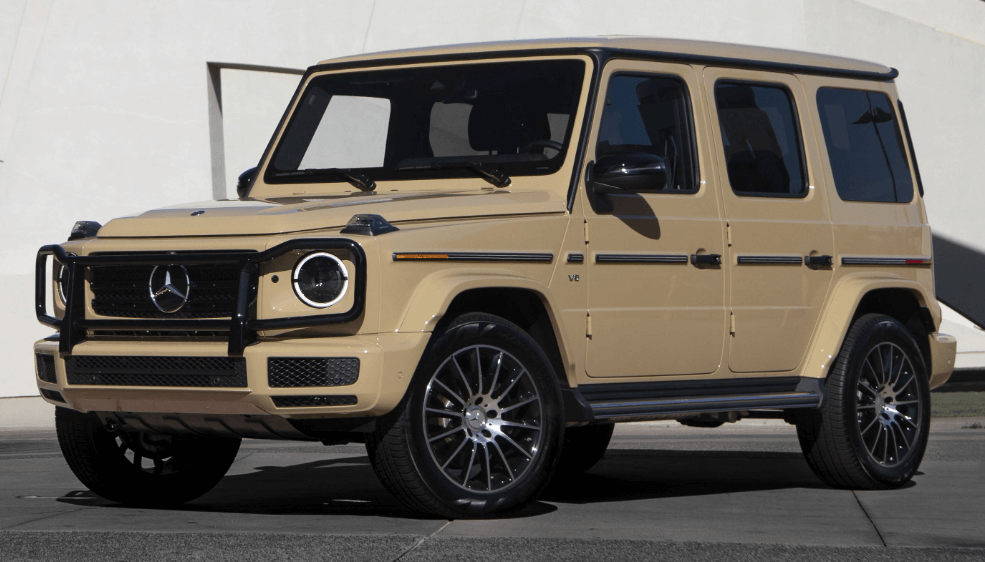
Developed as a military vehicle in the 1970s and now sold as a luxury item to people who will never take one off pavement, which is a strange fate for a machine this capable.
The hardware is real. Three locking differentials, a low-range transfer case, and around 9.5 inches of ground clearance. When Mercedes redesigned it in 2018 they kept the shape almost exactly, including the door handles and the exposed hinges, because changing it would have destroyed the entire proposition.
The box costs it dearly on fuel. Pushing a brick through the air at highway speed is expensive, and no amount of engineering fixes that.
8. Kia Soul
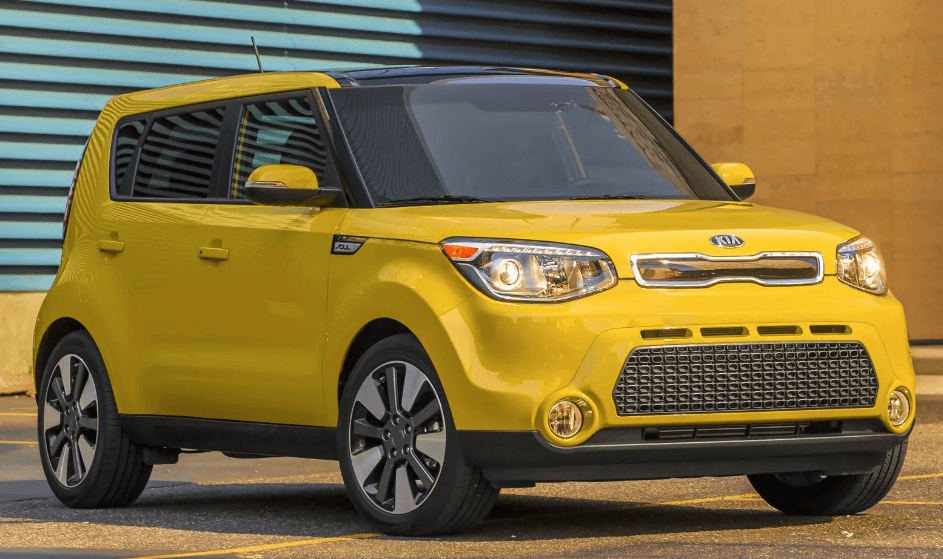
The most sensible car here and the one that proves the argument. The Soul is a cheap compact hatchback whose upright shape gives it interior space that embarrasses cars a size above, with a high seating position and excellent visibility.
It is also the last of the wave of boxy small cars from the late 2000s still standing, having outlived the Cube, the xB and the Element. Being genuinely good rather than merely quirky turned out to be the survival trait. It shows up regularly on our list of the best cars under $10k once they hit the used market.
You will need to buy these used
7. Nissan Cube
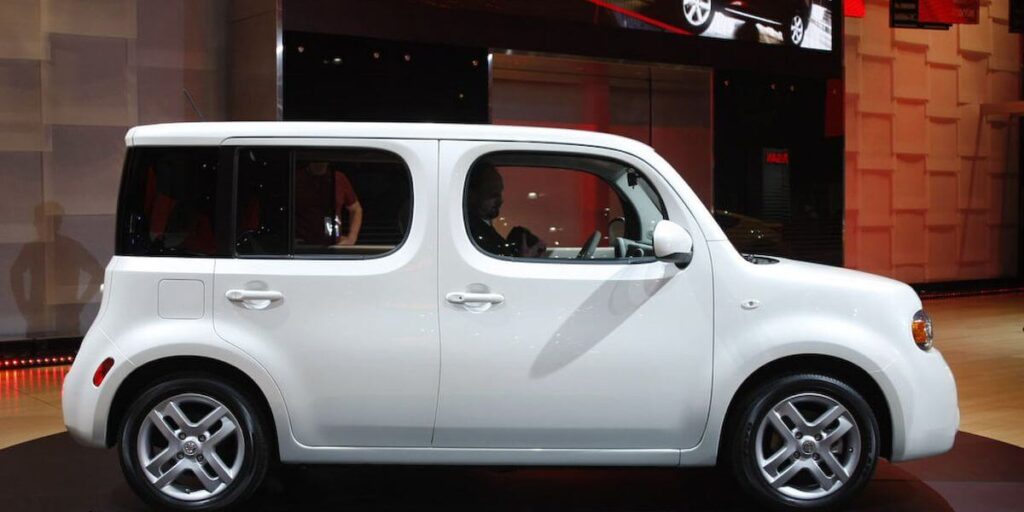
Sold in America only from 2009 to 2014, and the most committed design on this list. The Cube is deliberately asymmetrical, with a wraparound rear window that curves around one side and not the other, so it looks different depending on which side you approach from.
Inside there is a ripple pattern in the headliner meant to suggest water, and Nissan offered a circular shag rug for the dashboard. None of it makes the car better and all of it makes the car memorable, which was the point. It has become a cult object among younger buyers precisely because nothing built since has been this uninterested in blending in.
6. Honda Element
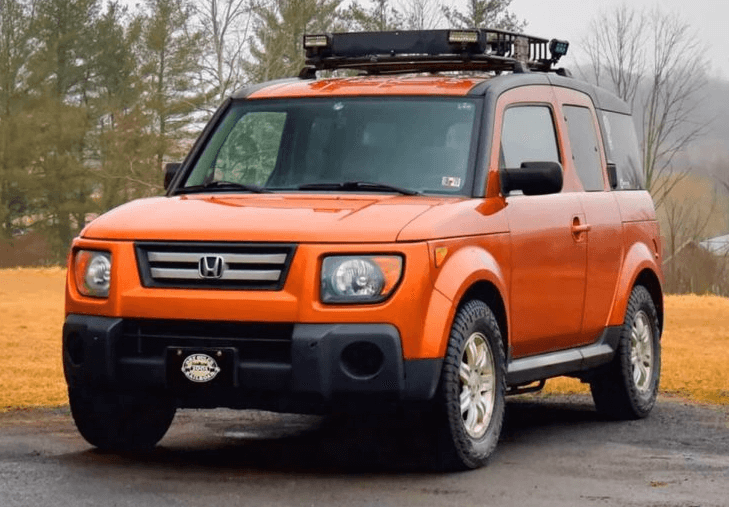
Built from 2003 to 2011 on CR-V underpinnings, and the most usable interior ever fitted to a vehicle this size.
The clever part is the doors. There is no B-pillar, and the rear doors are rear-hinged, so both open into one enormous aperture with nothing in the middle. Combine that with a plastic floor you can hose out, seats that fold flat against the walls or come out entirely, and a rear bench that reclines into a bed, and you have a vehicle that does things no crossover has managed since.
Honda built it for surfers and dog owners and sold it to neither in sufficient numbers. Values have been climbing for years as people work out what they lost.
5. Mini Clubman
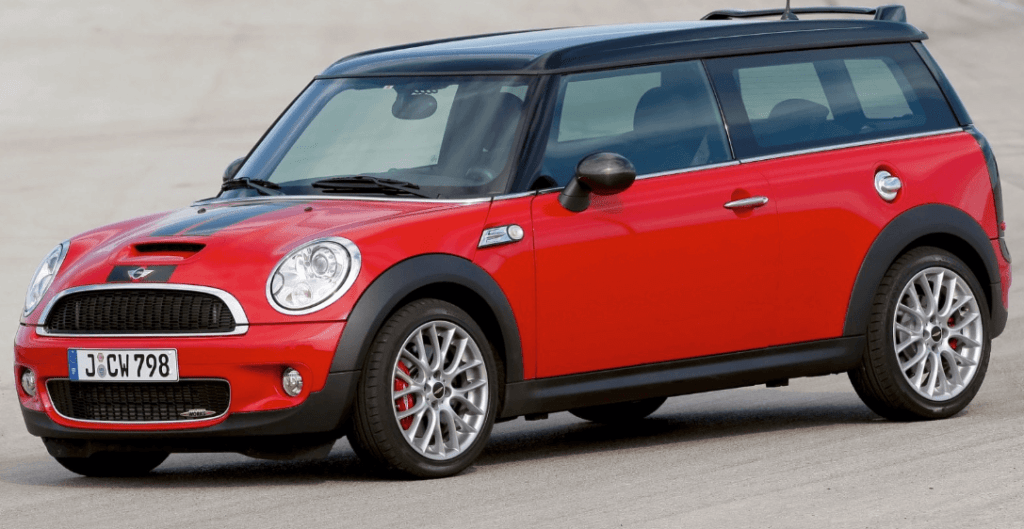
The rare boxy car that is also genuinely fun to drive. The Clubman stretched the Mini into a small estate and added split barn doors at the back instead of a hatch, which is impractical, obstructs the rear view, and looks fantastic.
It gave the Mini real luggage space and a back seat adults could use, without losing the sharp steering the brand is built on. Production ended in 2024, so this is a used proposition now.
4. Toyota FJ Cruiser
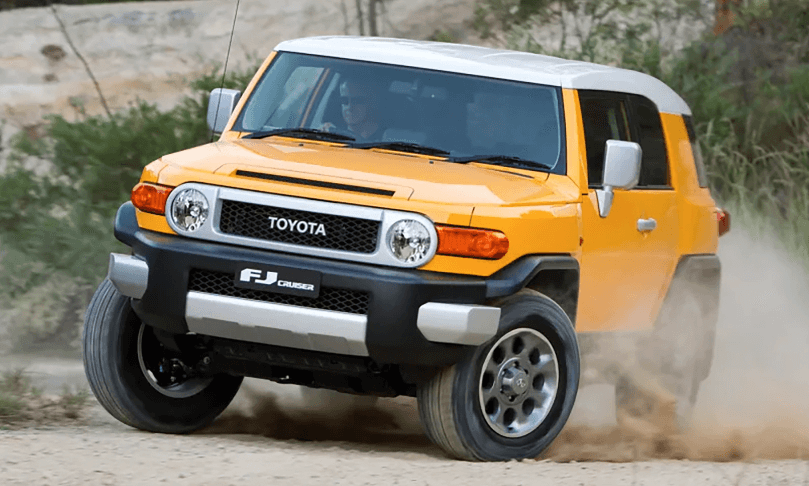
A deliberate homage to the FJ40 Land Cruiser, sold in America from 2007 to 2014, with the white roof, round headlights and wraparound rear glass all lifted from the original.
Underneath it was a proper body-on-frame Land Cruiser Prado with Toyota’s reliability record, which is why prices have held so stubbornly. The rear-hinged half doors are awkward, the blind spots are genuinely dangerous, and none of it has stopped these appreciating. Buying one now costs more than it did five years ago.
3. Scion xB
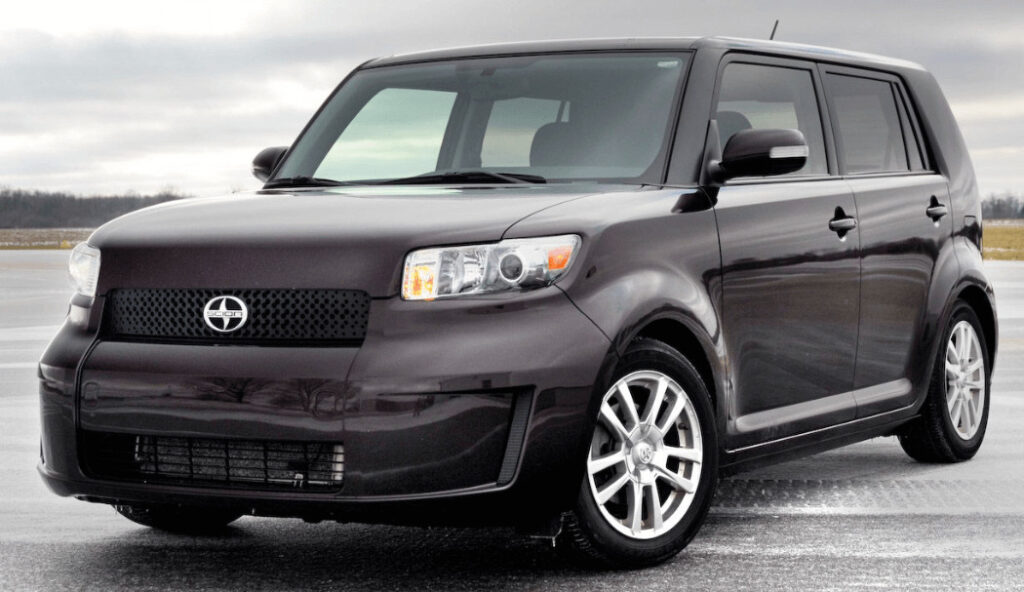
Worth separating the two generations, because enthusiasts only care about one of them. The 2004 to 2006 first-generation xB was a Japanese-market Toyota bB brought over almost unchanged: tiny, upright, light, and shaped like a filing cabinet. The 2008 redesign made it bigger, heavier and rounder, and lost most of what made it interesting.
The first-generation car became a tuning platform out of all proportion to its 108-horsepower engine, largely because the shape took modification so well. Scion itself was wound down in 2016.
2. Fiat Multipla
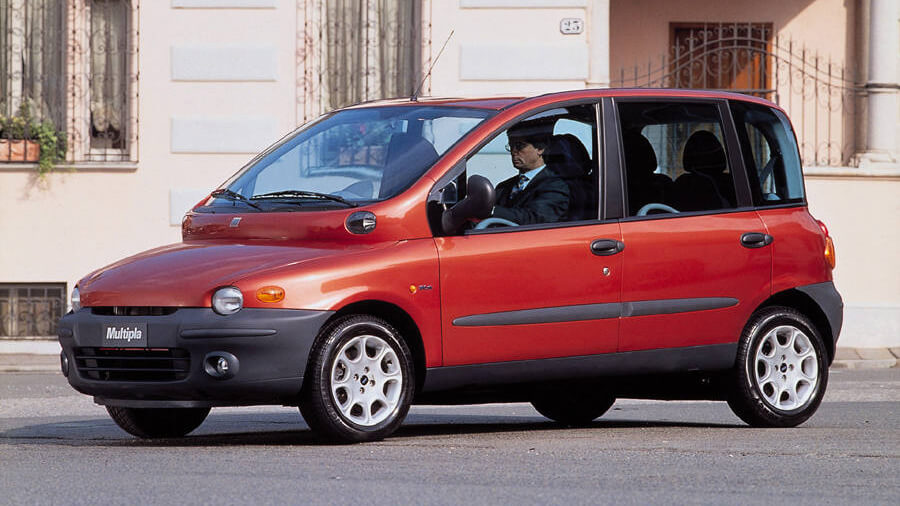
Never sold in North America, which is why most American readers have only seen it in photographs and lists of ugly cars.
The face is what everyone remembers, with a second band of glass above the headlights that makes it look like it has too many eyes. But the reason it exists is genuinely clever: six seats in two rows of three, in a vehicle shorter than a Ford Focus. No third row to climb into and no sliding doors needed, because everyone gets a front-row seat.
It is a serious piece of packaging engineering wearing a face nobody could love, and it has been quietly rehabilitated over the past decade by people who value the first part.
1. Volvo 240
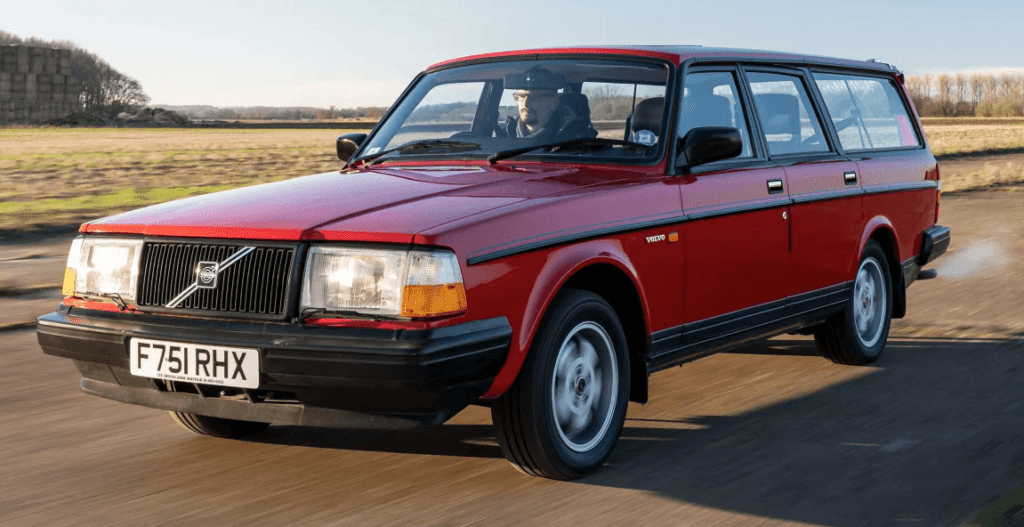
The definitive box. Built from 1974 to 1993 with barely a change to the silhouette, and still the shape people draw when asked to draw a boxy car.
The 240 earned its reputation on durability rather than charm. Simple mechanicals, a strong body, and an engine that will run past 300,000 miles with basic maintenance. It is straightforward enough to work on at home, which matters when the car is old enough to need it.
Values have been rising for years, particularly for clean wagons, as a generation that grew up in the back of one starts buying them. If you want one, the good examples are no longer cheap.
What the box revival looks like now
The trend this list documents has accelerated since it was written, and the newest entries are all SUVs.
Ford brought back the Bronco with a shape aimed squarely at the Wrangler. Land Rover redesigned the Defender around flat panels and visible fasteners. Toyota reintroduced the Land Cruiser in the United States with the upright styling the previous generation had abandoned, and Lexus did the same with the GX. The Ineos Grenadier exists because a customer wanted the old Defender badly enough to build a new one.
Even electric vehicles have gone square, since a flat battery floor and a boxy body maximise interior volume, and drag matters less at city speeds than it does on a freeway. Our roundup of the best boxy SUVs covers that side of the category in more depth.
Why boxes work
Interior space. A vertical windscreen and flat sides use every inch of the footprint. A sloping roof throws away rear headroom and cargo height for styling.
Visibility. Upright glass, thin pillars and a high seating position. Modern rounded cars have thick pillars and shallow rear windows, which is why they all need cameras.
Easier to place. When you can see the corners, parking and off-road line choice both get simpler.
Ageing well. Curved designs are tied to the era that produced them. A box is a box. The Volvo 240 does not look like a 1980s car so much as it looks like a Volvo.
The cost. Drag. Flat surfaces push a lot of air, and the fuel bill reflects it, particularly at highway speed. If economy is a priority, our guide to used cars with the best gas mileage points in a different direction, and if snow is the concern, see the best cars for snow.
For the older entries here, our guide to the best places to buy a used car is the practical starting point, since several have moved from cheap transport into collector territory.
Common questions
Why are boxy cars coming back?
Practicality and nostalgia together. Upright designs offer more usable space and better visibility, and buyers have tired of a market where everything looks the same. Electric platforms also suit square bodies well.
Which boxy cars can you still buy new?
From this list, the Jeep Wrangler, Mercedes G-Class and Kia Soul. Beyond it, the Ford Bronco, Land Rover Defender, Toyota Land Cruiser, Lexus GX and Ineos Grenadier.
Are boxy cars less fuel efficient?
Generally yes, because flat surfaces create more drag. The penalty is largest at highway speed and much smaller around town.
What is the most reliable boxy car?
The Volvo 240 and the Toyota FJ Cruiser both have exceptional records. The Honda Element is close behind and shares its mechanicals with the CR-V.
Which boxy cars are worth buying as investments?
The FJ Cruiser, Honda Element and clean Volvo 240 wagons have all appreciated. Treat any car as transport first, but these three have held value better than almost anything else in their price range.





Sources:
- 2023 Jeep® Wrangler | Start Your 4x4 Adventure Today. (n.d.). 2023 Jeep® Wrangler | Start Your 4x4 Adventure Today. https://www.jeep.com/wrangler.html
- 2023 Kia Soul Review, Pricing, and Specs. (2022, May 4). Car And Driver. https://www.caranddriver.com/kia/soul
- Volvo 240 series buyer’s guide: what to pay and what to look for | Classic & Sports Car. (2021, October 1). Volvo 240 Series Buyer’s Guide: What to Pay and What to Look for | Classic & Sports Car. https://www.classicandsportscar.com/features/buyers-guide-volvo-240-series
- Scion xB - Consumer Reports. (2023, January 9). Scion xB - Consumer Reports. https://www.consumerreports.org/cars/scion/xb/
- Top Gear’s guilty pleasures: the Fiat Multipla. (2022, December 30). Top Gear. https://www.topgear.com/car-news/best-2022/top-gears-guilty-pleasures-fiat-multipla