Chevrolet Corvette C7 ZR1: The Last of the Front-Engine Monsters
755 horsepower, 212 mph, thirteen radiators and a window in the hood because the supercharger would not fit underneath it. The C7 ZR1 was Chevrolet emptying the parts bin before the Corvette moved its engine behind the driver forever. Two years later the C8 arrived and nothing like this will be built again.
Updated: August 31, 2026 // History
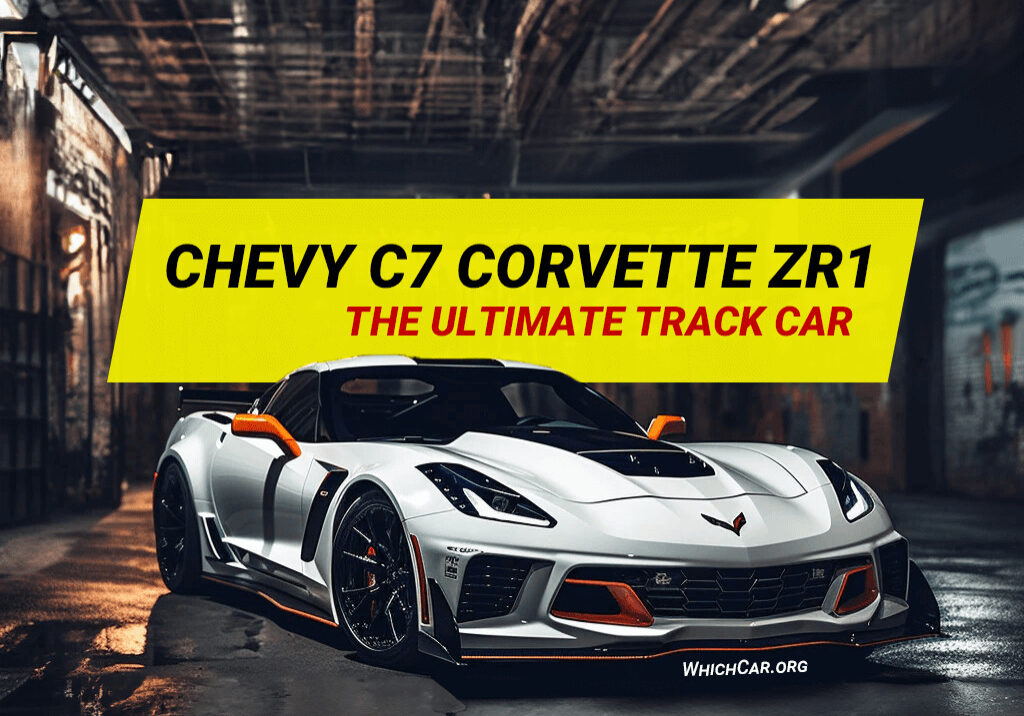
Chevrolet revealed the C7 ZR1 at the Dubai Motor Show in November 2017 as a 2019 model, and everybody in the room understood what it was. The mid-engine Corvette had been an open secret for years. This was the send-off for the layout the car had used since 1953.
They did not send it off quietly.
The LT5, and why it needed a hood window
The engine is a 6.2-litre supercharged V8 designated LT5, making 755 horsepower at 6,300 rpm and 715 lb-ft at 4,400. Worth stating clearly, because this gets confused constantly: the ZR1 uses the LT5. The LT4 is the Z06’s engine, and it makes 650.
The difference between them is mostly the blower. The LT5 uses a 2.65-litre supercharger against the LT4’s 1.7, roughly 50 percent larger, and it is physically too tall to fit under a standard Corvette hood. Chevrolet’s solution was a raised carbon fibre hood with a clear window in it, so the supercharger housing is visible from outside the car. It is the most honest piece of design on any modern Corvette.
The LT5 also runs both port and direct fuel injection, which is what allows it to make that power reliably on pump fuel rather than only in a magazine test.
What it does
0 to 60 mph in around 2.85 seconds and a top speed of 212 mph. A seven-speed manual was standard, which is remarkable for a car making this much power, and an eight-speed automatic was optional. The automatic is quicker. The manual is the one people wanted.
It was priced from roughly $122,000, which put it against cars costing two or three times as much. That value argument has always been the Corvette’s strongest card and the ZR1 played it harder than any Corvette before it.
Thirteen radiators
The number that tells you how serious the engineering was. The ZR1 carries thirteen heat exchangers, four more than the Z06, because Chevrolet had been publicly embarrassed by C7 Z06 models overheating during sustained track use and was not going to repeat it.
That is the sort of detail that separates a genuine track car from a horsepower headline. The ZR1 will do repeated hot laps without pulling power to protect itself, which a lot of more expensive machinery cannot manage.
Two aero packages
The standard car came with a low rear wing tuned for top speed. The optional ZTK Track Performance Package added a much larger adjustable high wing, stiffer springs, revised Magnetic Ride Control tuning and Michelin Pilot Sport Cup 2 tyres.
With the high wing fitted, the ZR1 generates around 950 pounds of downforce. That costs it top speed, which is why the fastest configuration and the fastest lap configuration are different cars. Carbon ceramic brakes were standard on both.
On track
The ZR1 was never just a straight-line car, which is the usual accusation levelled at American performance. It posted lap times at Virginia International Raceway quick enough to beat machinery costing several times more, including cars from manufacturers who take lap records extremely seriously.
Performance Traction Management, GM’s launch and traction system, is the unglamorous reason it is usable. It gives a driver access to most of the car’s capability without requiring a racing licence, and it is one of the better implementations anyone has shipped.
A quick word on the C7 itself
The seventh-generation Corvette arrived for 2014 after a delay caused by General Motors’ bankruptcy and restructuring. Its most significant change was structural: an aluminium frame across the whole range, where the C6 had reserved that for the Z06.
Worth correcting a common mix-up. The C7 is front-engined, like every Corvette before it. The engine sits ahead of the driver, behind the front axle line. The first mid-engine Corvette is the C8, which arrived for 2020 and is covered in our guide to the C8 Corvette.
Why it still matters
The ZR1 is the high-water mark of a seventy-year layout. Every front-engine Corvette from 1953 onward led here, and the moment it went on sale the formula was retired.
The C8 that followed is a better car by most measurable standards, and the C8 ZR1 that came later makes considerably more power. Neither of them is the last of anything, which is precisely what makes the C7 version collectible. Values have held far better than a 2019 Chevrolet has any right to expect.
Whether any of this makes it a muscle car is a separate argument, and one we take up in is a Corvette a muscle car. The short version is no, and the ZR1 is the clearest evidence: a car engineered around downforce, brake cooling and lap times has very little to do with dropping a big engine into an affordable sedan.
For the wider context, our roundup of the most popular dream cars covers where the Corvette sits against its rivals, and sports cars under $50,000 covers the attainable end of the same idea.
Fast facts
- Revealed at the Dubai Motor Show in November 2017 for the 2019 model year
- Supercharged 6.2-litre LT5 V8: 755 horsepower and 715 lb-ft
- Top speed 212 mph, 0 to 60 mph in roughly 2.85 seconds
- Seven-speed manual standard, eight-speed automatic optional
- Thirteen radiators, four more than the C7 Z06
- Around 950 pounds of downforce with the ZTK package’s high wing
- Carbon ceramic brakes and Magnetic Ride Control standard
- The last front-engine Corvette, and the most powerful one ever built
Common questions
What engine is in the C7 ZR1?
A supercharged 6.2-litre LT5 V8 producing 755 horsepower. It is not the LT4, which is the Z06’s 650-horsepower engine.
Why does the ZR1 have a window in the hood?
The 2.65-litre supercharger is too tall to fit under a conventional hood. Chevrolet raised the hood and put a clear panel in it rather than hiding the problem.
Is the C7 ZR1 mid-engine?
No. Every C7 is front-engined. The mid-engine Corvette is the C8, which arrived for the 2020 model year.
How fast is the Corvette C7 ZR1?
Roughly 2.85 seconds to 60 mph and a top speed of 212 mph with the low-drag standard wing. The ZTK package trades top speed for downforce.
Why does it need thirteen radiators?
Sustained track use generates enormous heat, and the C7 Z06 had a public reputation for reducing power when it got hot. Chevrolet over-engineered the cooling on the ZR1 specifically to avoid that.
Is the C7 ZR1 a good investment?
It has held value considerably better than most modern Chevrolets, helped by being the final and most powerful front-engine Corvette. Manual cars and ZTK-equipped examples command the strongest prices.