
What Does Dodge SRT Stand For?
Short Answer: Street and Racing Technology, an in-house performance engineering division. When you see the badge, the car has been through that team rather than simply given a bigger engine and a body kit.
Updated: September 1, 2026 // Questions
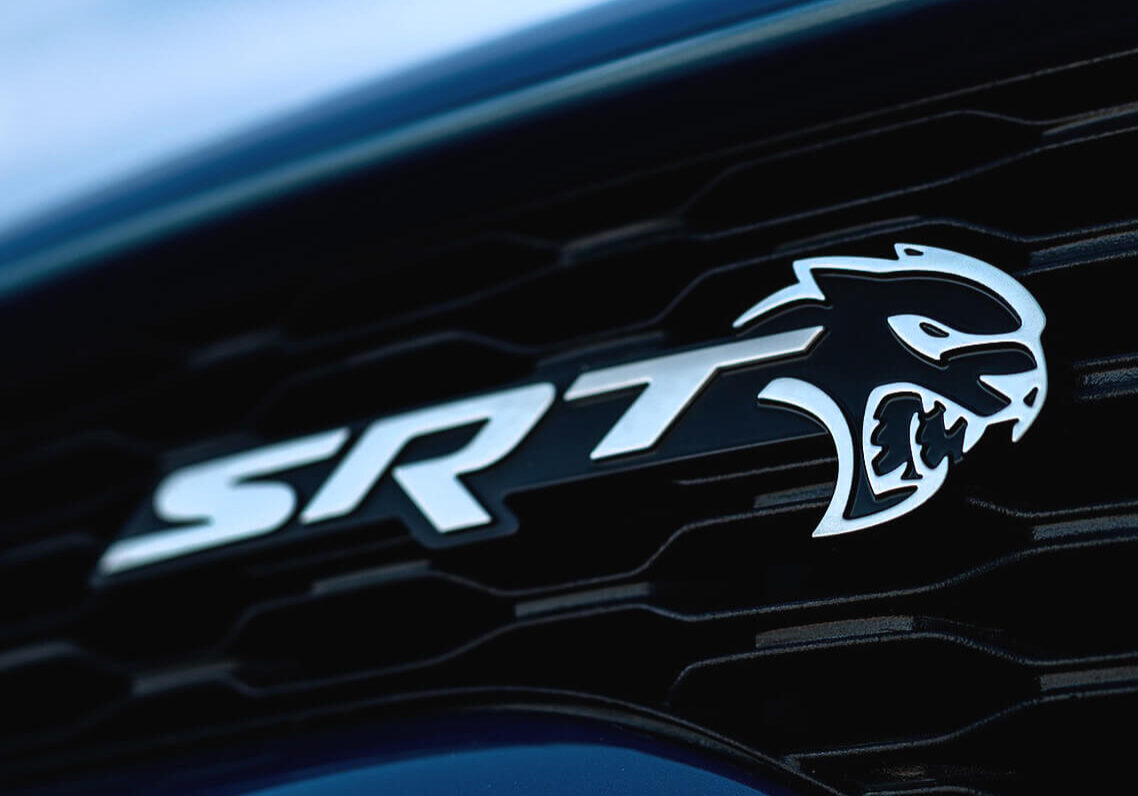
SRT stands for Street and Racing Technology. The more useful answer is what it does: it is the in-house group that takes ordinary Stellantis products and re-engineers them into the fastest things the company sells, and it has been doing that under three different names since 1989.
Where it came from
The lineage starts in 1989 with a small internal group nicknamed Team Viper, assembled to build the car that became the Dodge Viper. That project proved Chrysler could develop a low-volume performance car quickly and outside normal processes.
The team was formalised as Performance Vehicle Operations, and in 2004 it was renamed Street and Racing Technology. For a brief period from 2012, SRT was spun out as a standalone brand in its own right, with the Viper sold simply as an SRT rather than a Dodge. That did not last, and it was folded back into Dodge in 2014.
The badge has never been Dodge-only. SRT has appeared on Chrysler, Jeep and Ram products throughout, which is why a Grand Cherokee and a Ram pickup have both worn it.
What the number after SRT means
On older models, the number tells you the cylinder count. It is one of the tidier naming conventions any manufacturer has used.
- SRT-4: the Dodge Neon SRT-4, with a turbocharged four-cylinder
- SRT-6: the Chrysler Crossfire SRT-6, with a supercharged V6
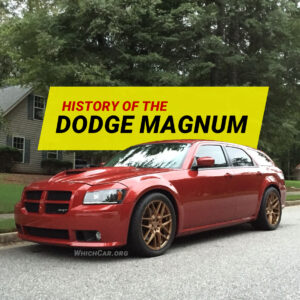
- SRT8: a 6.1-litre and later 6.4-litre Hemi V8, used across the Charger, Challenger, 300C, Magnum and Grand Cherokee
- SRT-10: the 8.3-litre V10 from the Viper, also fitted to the Ram SRT-10 pickup
The convention was dropped later on. Modern cars simply wear SRT, with the specific engine indicated by a separate name such as 392, Hellcat or Trackhawk. So a Durango SRT 392 and a Durango SRT Hellcat are very different vehicles wearing the same three letters.
What SRT actually changes
The engine is the obvious part and the least interesting. What separates an SRT car from a trim package is that the rest of the vehicle gets reworked to cope.
Brakes. Brembo hardware with larger rotors, on cars where the standard system would fade quickly under repeated use.
Suspension. Stiffer springs, revised geometry and adaptive damping on most models, tuned specifically rather than borrowed from another car in the range.
Cooling. The unglamorous one that matters most. Making big power is straightforward; making it repeatedly without heat soak requires additional radiators and oil coolers, and this is where budget performance packages usually fall short.
Drivetrain. Strengthened transmissions, driveshafts and differentials to survive the torque.
The models that wore it
Worth being clear about status, since much of this range has now ended production.
Discontinued: the Challenger and the previous-generation Charger both ended production in December 2023, taking the SRT Hellcat, Redeye, Super Stock and Demon variants with them. The Viper ended in 2017, and the Chrysler 300 SRT8 and Magnum SRT8 long before that.
Continuing: the Durango has carried the badge across both the naturally aspirated 392 and the supercharged Hellcat versions, and Jeep has used it on the Grand Cherokee SRT and the Trackhawk.
Two figures that get mixed up constantly: the Durango SRT 392 uses a naturally aspirated 6.4-litre Hemi making 475 horsepower. The Durango SRT Hellcat uses the supercharged 6.2-litre and makes 710. Not every SRT is supercharged, and the difference between those two cars is enormous.
SRT versus the rest of the range
The most common confusion is between SRT and the R/T Scat Pack, which sits directly below it. The short version is that the Scat Pack gets the naturally aspirated 6.4-litre Hemi and SRT badging generally indicates the supercharged 6.2, though the naming has not been perfectly consistent across model years and vehicles.
Our full breakdown of the difference between a Hellcat and a Scat Pack covers where each sits and what the running costs look like, and the Demon versus Hellcat comparison covers the top of the range.
What happens to SRT now
The supercharged Hemi era ended with the Challenger and Charger. Dodge’s replacement Charger launched as an electric Daytona alongside a twin-turbo inline-six, and the performance naming has carried across in modified form.
Whether SRT returns as a badge on internal-combustion models, and in what form, has been an open question since. Check current news rather than relying on any article’s speculation, including this one.
For the full arc of how that era ended, see our Challenger evolution history, and if you are shopping used, the used Challenger pros and cons guide covers what to check.
Common questions
What does SRT stand for?
Street and Racing Technology, the in-house performance division that develops the fastest vehicles in the Dodge, Chrysler, Jeep and Ram lineups.
What does the number after SRT mean?
On older models it indicates cylinder count: SRT-4 for a four-cylinder, SRT-6 for a V6, SRT8 for a V8 and SRT-10 for the Viper’s V10. Newer cars drop the number.
Is every SRT supercharged?
No. The Durango SRT 392 and the older SRT8 models use naturally aspirated Hemi V8s. Only the Hellcat-derived engines are supercharged.
Is SRT the same as Scat Pack?
No. Scat Pack sits below SRT and uses the naturally aspirated 6.4-litre Hemi. SRT models generally carry the supercharged 6.2.
When was SRT founded?
The lineage begins with Team Viper in 1989. The group became Performance Vehicle Operations and was renamed Street and Racing Technology in 2004.
Does SRT only appear on Dodge?
No. Chrysler, Jeep and Ram have all sold SRT models, including the 300C SRT8, the Grand Cherokee SRT and the Ram SRT-10.


Sources:
- Stellantis Media. (n.d.). https://media.stellantisnorthamerica.com