Buying a Used Ford Mustang: Pros, Cons and the Years That Matte
The Mustang is the cheapest way into a V8, rear-drive American coupe, and that is exactly why so many used ones have been abused. The car is not the risk here. The previous owner is. Here is what each generation gets you, which engines and gearboxes have known faults, and how to tell a good one from a cheap one.
Updated: August 19, 2026 // Pros & Cons
Home // Pros & Cons //
Ford has built the Mustang continuously since 1964, which means the used market is enormous and the price range runs from a few thousand dollars to well past six figures. That is the strength and the trap. There is a Mustang at almost any budget, and the ones at the bottom got there for a reason.
This is a guide to the generations you are realistically shopping, what goes wrong with each, and where the value actually sits.
The generations you will be looking at
S197 (2005-2014): the cheap way in
The retro-styled car that revived the Mustang’s fortunes. Solid rear axle throughout, which is the defining limitation, and a live-axle car is fine in a straight line and unhappy on a bumpy back road.
Engine history matters here. The V6 was a 4.0-liter making 210 horsepower through 2010, then a much better 3.7-liter with 305 horsepower from 2011. The GT used a 4.6-liter V8 making around 300 horsepower until 2010, when the 5.0-liter Coyote arrived with over 400.
The 2011 model year is the dividing line. Cars before it are noticeably slower and worth less; cars after it are the ones to target.
S550 (2015-2023): the modern one
The generation that finally fitted independent rear suspension, and it transformed the car. This is where the Mustang stopped being a straight-line machine with a chassis problem and became something you could take on a twisty road without apologizing.
The lineup was a 2.3-liter EcoBoost four at 310 horsepower, a 3.7-liter V6 that disappeared after 2017, and the 5.0-liter GT at 435 horsepower, raised to 460 for 2018 along with an available ten-speed automatic.
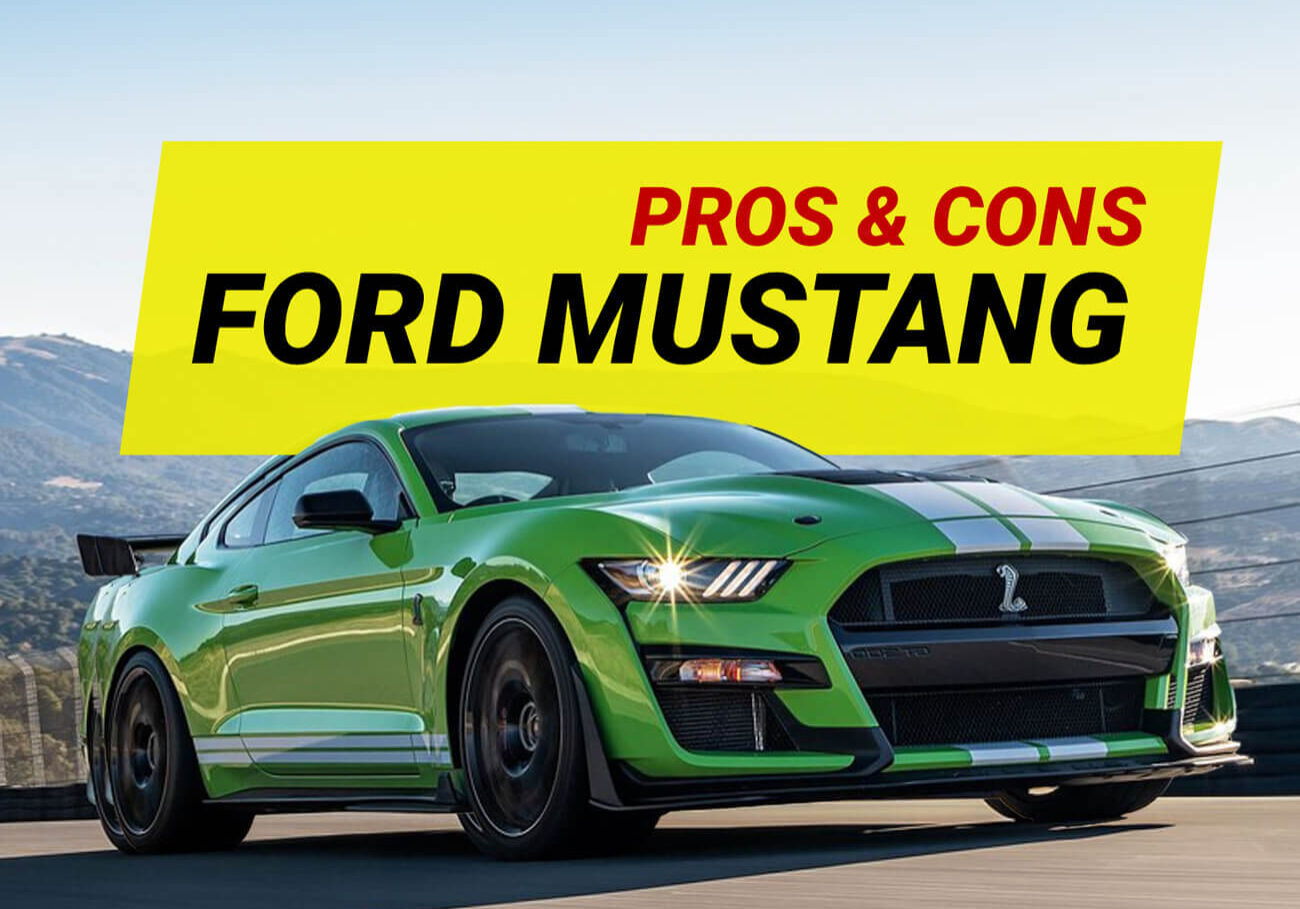
Above those sat the interesting ones. The Shelby GT350 used a 5.2-liter flat-plane-crank V8 revving to 8,250 rpm, which sounds like nothing else Ford has built. The Bullitt and the Mach 1 were 480-horsepower specials. The GT500 arrived for 2020 with a supercharged 760 horsepower.
S650 (2024 onward): still nearly new
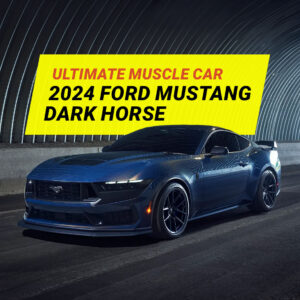
The current car, with a 480-horsepower GT and the 500-horsepower Dark Horse above it. Too new to have a meaningful used market or a reliability record. Our Dark Horse breakdown covers what that model offers.
The pros
Performance per dollar is still unmatched. A used GT delivers acceleration that cost supercar money two decades ago, at a price most people can reach. Nothing else offers a V8 and rear-wheel drive this cheaply.
The aftermarket is effectively infinite. More parts exist for the Mustang than for any other car in America. Whatever you want to do to it, someone sells the kit and someone has written the guide.
Parts and repair are cheap. Every mechanic in the country has worked on one. Compare that to a used German performance car, where a specialist inspection alone costs what a Mustang water pump costs installed.
It is the last one standing. With the Camaro and Challenger both out of production, the Mustang is the only traditional V8 pony car still being made. That has already started to firm up values on the good used versions.
Depreciation has mostly happened. A well-kept S550 GT holds value better than most performance cars of the same age, and the special editions have stopped falling entirely.
The cons
The rear seat is not usable. Around 30 inches of legroom, behind long doors that need a wide parking space to open. Adults will fit for a short trip and resent you for it. If you regularly carry four people, buy something else.
No all-wheel drive, ever. The Mustang has always been rear-drive only. With winter tires it is manageable in snow, and with the summer tires most performance trims came on it is genuinely unusable. Budget for a second set of wheels if you live somewhere cold.
Fuel economy is what you would expect. The V8 cars return low-to-mid twenties on the highway if you are gentle, and considerably less if you are not.
Insurance is expensive, especially young. A V8 coupe is priced as exactly what it is. Get quotes on specific VINs before you commit, and read our overview of how car insurance is calculated if the number surprises you.
Most used examples have been driven hard. This is the real one. Mustangs attract owners who want to use the power, and a decade of that leaves marks the odometer does not show.
Known problems by generation
The 3-valve 4.6-liter V8 (2005-2010) breaks spark plugs. The two-piece design seizes in the head and separates on removal, turning a routine service into an extraction job. Ask when the plugs were last changed and whether the shop had trouble.
The MT82 manual (2011 onward) has a reputation. Notchy shifts, occasional grinding into third, and difficulty selecting gears when cold. Ford revised it repeatedly. Drive any manual car hard through every gear, cold and warm, before buying.
The Coyote 5.0 can tick. Some noise is normal for this engine and some indicates a real problem. Have someone who knows the engine listen before you assume either way.
The GT350’s flat-plane V8 uses oil. That is characteristic rather than a defect, but early cars had documented issues. These are specialist cars now and deserve a specialist inspection.
Check for modifications and abuse. A tune, a supercharger, drag radials, or a welded differential all tell you how the car lived. So does uneven rear tire wear, a clutch biting at the top of its travel, and a hastily repainted rear quarter panel.
Which one should you buy?
Best all-round buy: a 2018 or later S550 GT. The 460-horsepower engine, independent rear suspension, and the improved interior make this the sweet spot. Manual if you want the experience, ten-speed automatic if you want the quicker car.
Best value: a 2011-2014 S197 GT. The Coyote engine at S197 prices. You give up the independent rear suspension and the modern cabin, and you save a lot of money.
Best daily driver: an EcoBoost S550. Considerably cheaper to run and insure, still quick, and it handles well. Enthusiasts will tell you it is not a real Mustang. Enthusiasts are not paying your fuel bill.
Best if you plan to keep it: a Bullitt, Mach 1, or GT350. Limited-run cars have stopped depreciating and several have started climbing.
Avoid: the pre-2011 V6. It is slow enough to be frustrating and cheap enough to have attracted careless owners. If your budget only reaches that, our list of the best cars under $10k has better options.
Before you buy
Get a pre-purchase inspection. Not optional on a car this likely to have been thrashed. A compression test on a V8 with unknown history is money well spent.
Ask for records, not stories. A folder of receipts is worth more than a low odometer reading.
Drive it cold. Ask the seller not to warm it up. Cold start noises and cold-gearbox behavior are where the problems show themselves.
Check the tires. Mismatched brands, uneven rear wear, or cheap tires on an expensive car all tell you something about the last owner’s priorities.
For where to shop, see our guide to the best places to buy a used car. If you are cross-shopping, the Mustang versus Camaro and Mustang versus Challenger comparisons cover the rivals, and our Mustang evolution history traces the whole line from 1964.
Common questions
What is the best year for a used Mustang?
2018 through 2023 for the S550 GT, which combines the 460-horsepower engine with the improved interior and independent rear suspension. For value, 2011 through 2014 gets you the Coyote V8 much cheaper.
Are used Mustangs reliable?
Mechanically, yes, by performance car standards. The risk is condition rather than design, because these get driven hard. Buy on history rather than on model year.
Is the EcoBoost Mustang worth buying?
Yes, if running costs matter. It is quick, handles well, and costs meaningfully less to fuel and insure. You lose the V8 sound, which for some buyers is the entire point.
Can you drive a Mustang in snow?
With winter tires, yes. On the summer tires most performance trims came with, no. There has never been an all-wheel-drive Mustang coupe.
How much should I budget beyond the purchase price?
Set aside for tires and brakes at minimum, since both wear fast and neither is cheap on a V8 car. If the service history is thin, budget for a full catch-up in the first year.