
The 10 Most Popular Dream Cars of All Time
Every one of these was somebody's bedroom wall. Some are worth more than houses now, one was built by a company that had made three cars before it, and the fastest of them all had a naturally aspirated engine and no traction control. These are the poster cars, ranked, and why they still matter decades later.
Updated: August 18, 2026 // Top Lists
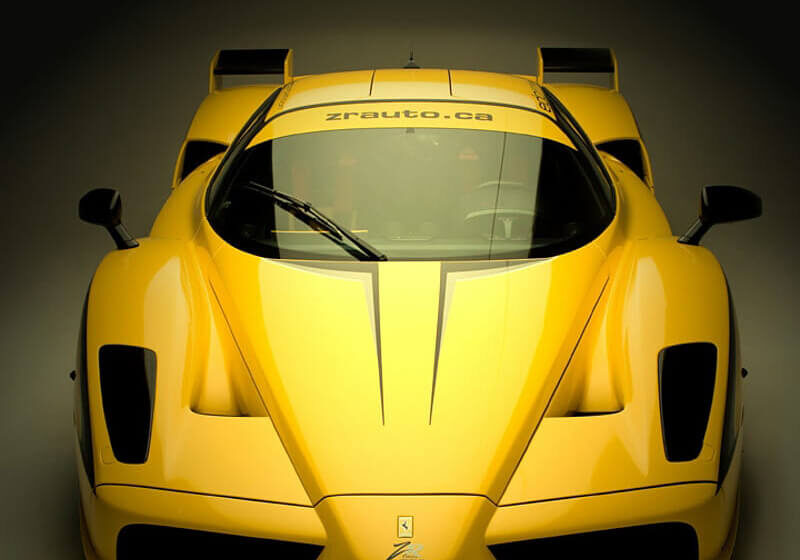
A dream car is not the same as a fast car. Plenty of quick machinery has come and gone without anyone taping a photograph of it to a wall. What separates the cars below is that each one changed something, and enthusiasts who were not born when they were built still know exactly what they are.
These are the historic icons rather than current models. For what people are lusting after today, see our list of the most popular dream cars on the road now.
10. Ferrari 250 GTO
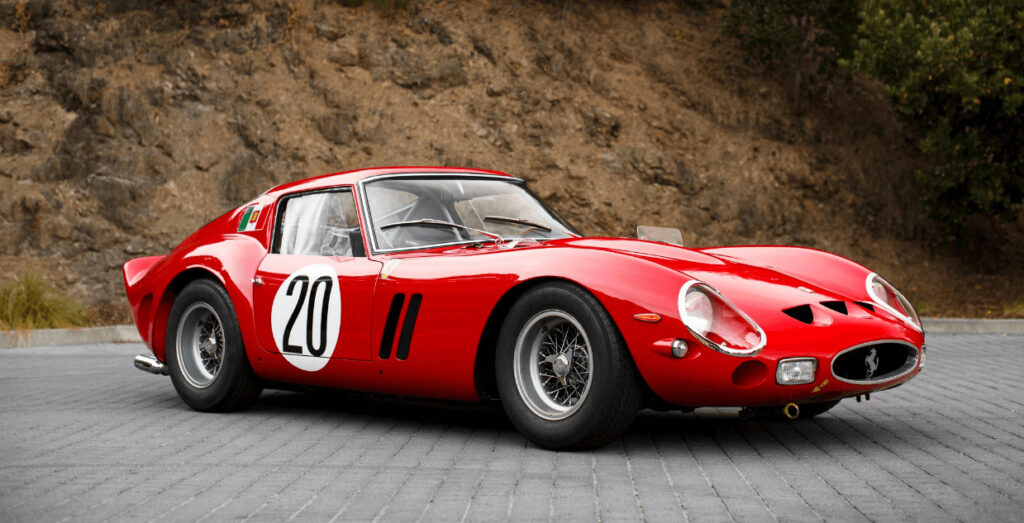
The most valuable car in the world, and the argument for why is more interesting than the price. Built between 1962 and 1964 in a run of roughly three dozen, the 250 GTO was a genuine racing car that happened to be road legal, with a 3.0-liter V12 and bodywork shaped by wind tunnel work at a time when that was still unusual.
It also carried an integrated rear spoiler, one of the first road cars to do so. Examples have changed hands privately for figures north of $50 million, which puts it beyond collecting and into the territory of art.
9. Lamborghini Miura
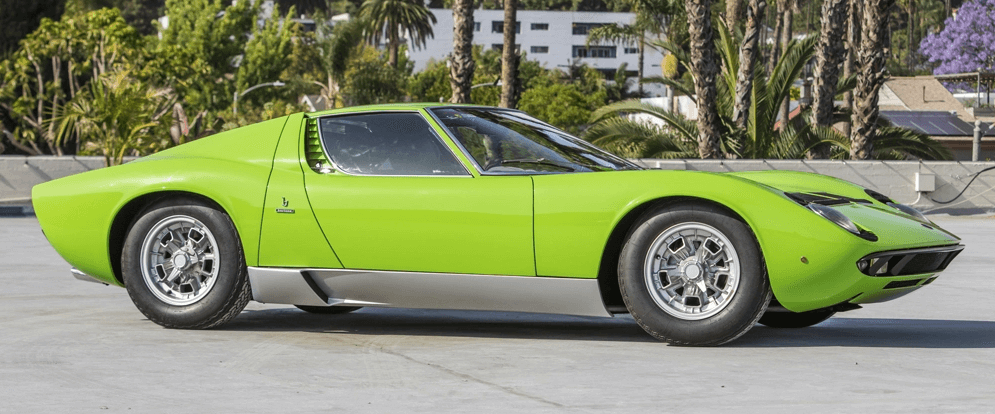
The car that invented the supercar, and it happened almost by accident. Lamborghini’s engineers designed the mid-engine chassis as a side project, and Ferruccio Lamborghini agreed to show it at Turin in 1965 as a bare rolling chassis. The reaction was strong enough that the company built the car around it.
Launched in 1966 with a transverse V12 making 350 horsepower, the Miura put the engine behind the driver in a road car, which nobody had done at that level before. The eyelash detailing around the headlights remains one of the most recognizable design flourishes ever applied to a car.
8. Aston Martin DB5
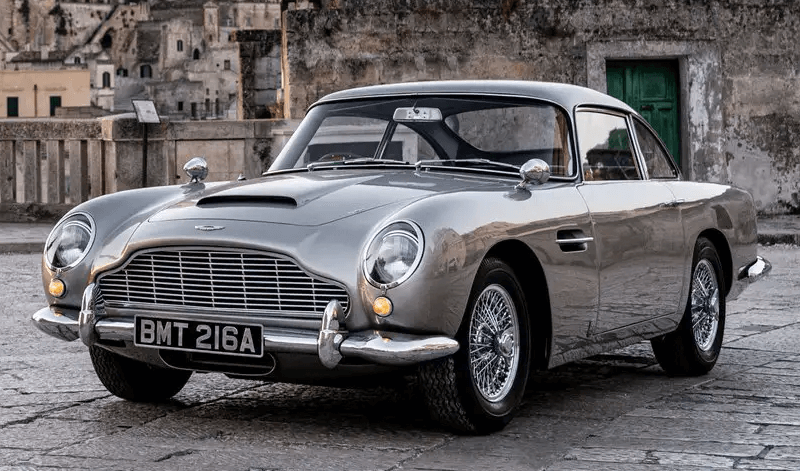
The most famous car in cinema, and the one on this list whose fame most exceeds its engineering. The DB5 was a fine grand tourer with a 4.0-liter straight six, but it is here because of Goldfinger, and there is no point pretending otherwise.
What that association is worth is genuinely remarkable. Ordinary DB5s trade in the high six figures to low seven, while one of the surviving screen cars sold at auction for over $6 million. The same car, with a film history, is worth several times the same car without one.
7. Mercedes-Benz 300SL Gullwing
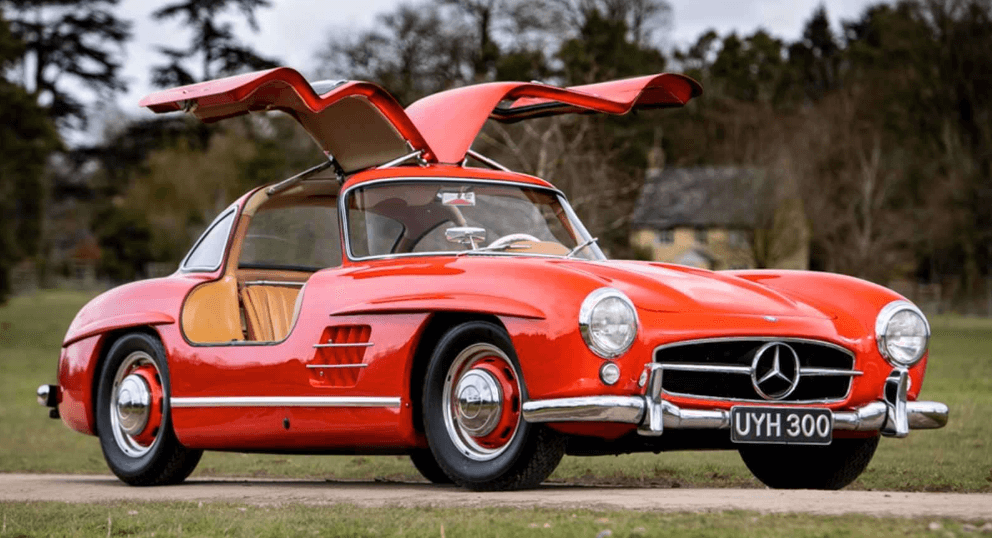
Named Sports Car of the Century by an international panel in 1999, and it earned that on engineering rather than charisma.
The 300SL arrived in 1954 as the first production car with mechanical direct fuel injection, which is why it was so much faster than anything else on the road. The famous upward-hinging doors were not a styling decision at all. The tubular spaceframe chassis had such deep side sills that conventional doors were impossible, so the roof had to open instead. Form following engineering, and it produced one of the most beautiful cars ever made.
6. Porsche 911 GT2 (993)
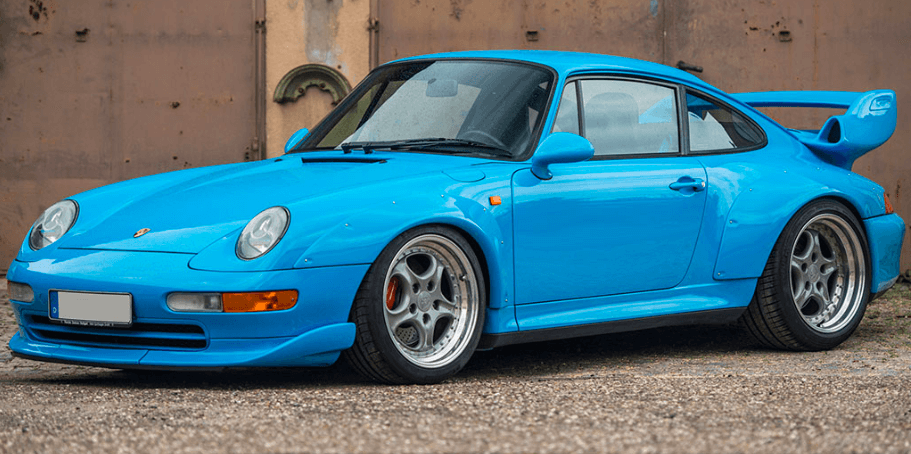
The 911 has been in production since 1963, and the 993 GT2 is the version enthusiasts speak about in lowered voices.
Built between 1995 and 1998 to satisfy GT2 class racing homologation rules, which prohibited all-wheel drive, it took the 993 Turbo and removed the front driveshafts. That left a rear-engine, rear-drive car with a twin-turbocharged 3.6-liter flat six making around 424 horsepower, riding on bolt-on plastic wheel arch extensions and lacking most of the safety net later Porsches would carry.
Fewer than 200 were made. It earned the nickname Widowmaker, and it earned it honestly.
5. Ford GT40
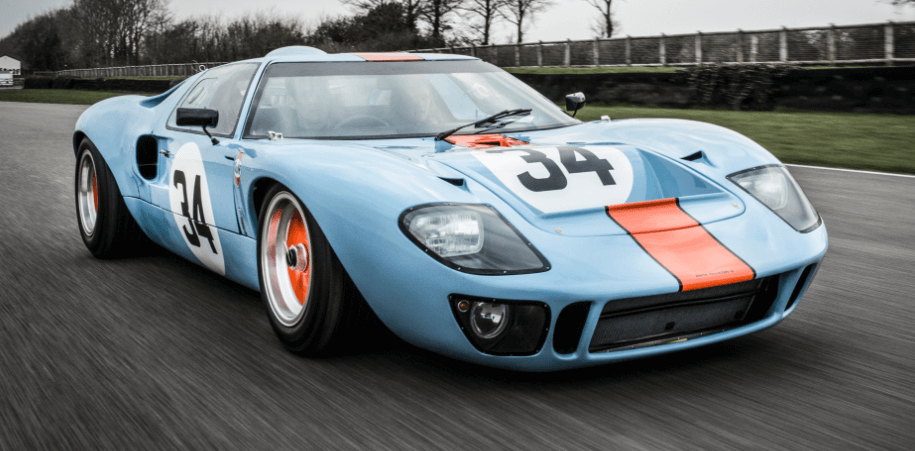
The best revenge story in motorsport. Ford attempted to buy Ferrari in 1963, Enzo Ferrari walked away from the deal late, and Henry Ford II responded by funding a program specifically to beat Ferrari at Le Mans.
It took three years and considerable pain, and then the GT40 won Le Mans four consecutive times from 1966 to 1969, including the famous 1966 finish where Ford cars filled the podium. The name comes from its height: forty inches at the roofline.
American engineering beating the Italians at their own event remains the foundation of a lot of national automotive pride, and the arguments about how to categorize American performance cars still trace back to this era.
4. Bugatti Veyron
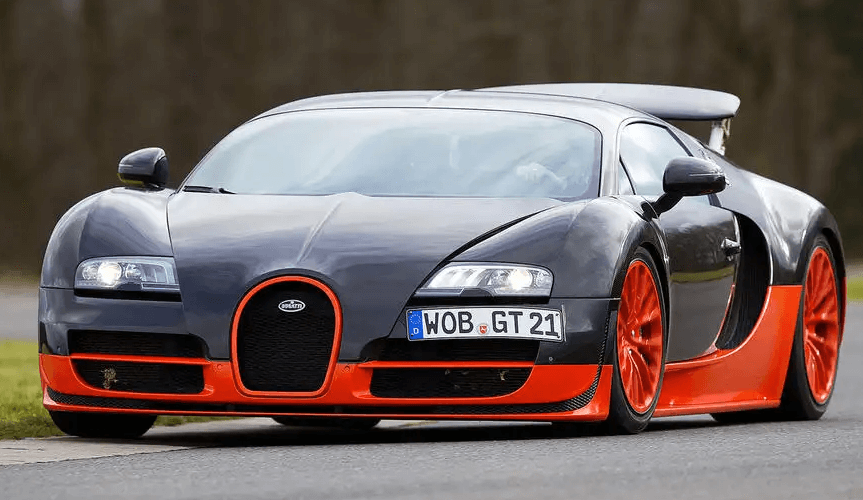
The car that made every other supercar look modest overnight. Volkswagen set out in 2005 to build something with 1,000 metric horsepower and a 250 mph top speed, and then did it, which nobody expected.
The 8.0-liter quad-turbocharged W16 needed ten radiators. At full speed the car empties its fuel tank in roughly twelve minutes and goes through a set of tires in about fifteen. Around 450 were built across coupe and roadster forms, and Volkswagen is widely reported to have lost money on every one.
It was never the sharpest handling car of its era, and it did not need to be. The Veyron existed to prove a point about what was possible when cost was not a constraint.
3. Ferrari Enzo
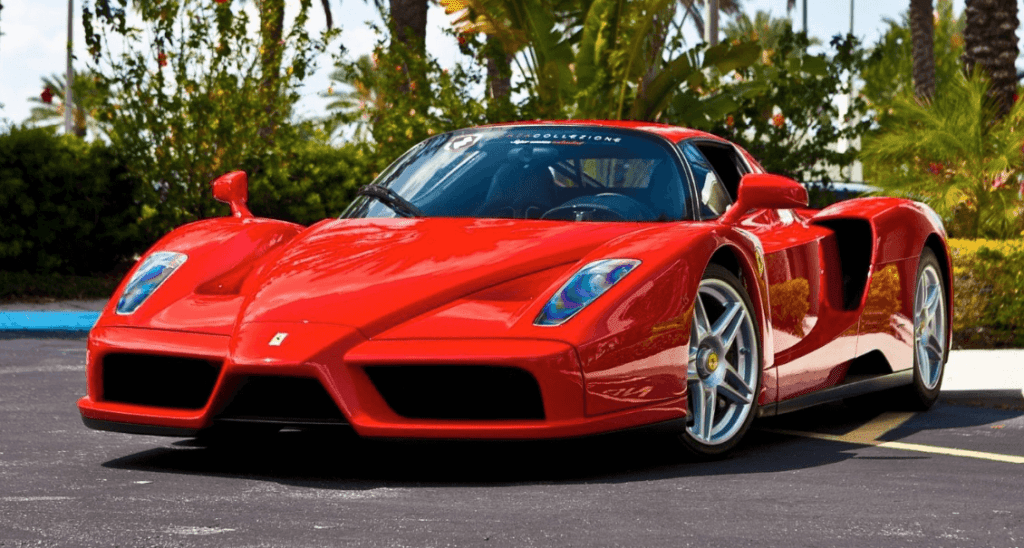
Ferrari named it after the founder, which tells you how the company regarded it. Launched in 2002 with a carbon fiber and aluminum honeycomb chassis, Formula One derived technology throughout, and a 6.0-liter V12 producing 651 horsepower.
That engine, the F140, mattered beyond this car. It became the basis for Ferrari’s V12 family for the next two decades. Only 400 Enzos were built, and Ferrari selected who was allowed to buy one rather than taking orders, a practice it continues with its flagship models.
2. Koenigsegg Agera RS
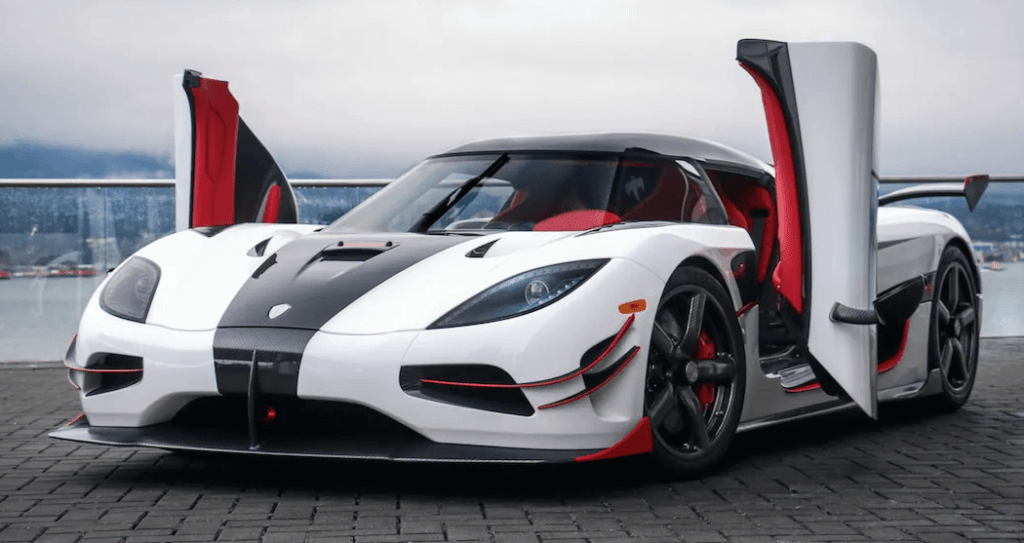
In November 2017, on a closed stretch of Nevada highway, an Agera RS averaged 277.9 mph across two runs in opposite directions, which is the standard that makes a top speed record legitimate rather than a marketing number.
The twin-turbo V8 makes 1,160 horsepower as standard and 1,360 with the optional package. What makes the achievement remarkable is the scale of the company: Koenigsegg was a small Swedish operation building cars in the low dozens, and it beat manufacturers with a century of resources.
The record has since been surpassed. It was still the moment a garage-scale manufacturer took the crown from everyone.
1. McLaren F1
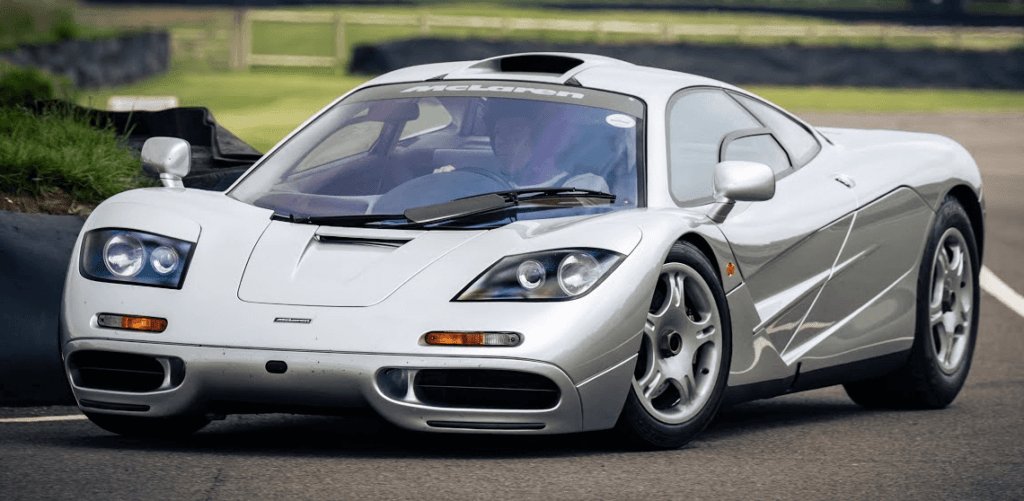
Gordon Murray designed it with no compromises and no committee, and thirty years later it remains the standard everything else is measured against.
The specification still reads strangely. A central driving position with two passenger seats set back on either side. The first road car with a carbon fiber monocoque. An engine bay lined with gold foil, chosen because it is the best heat reflector available and cost was not the deciding factor. A naturally aspirated BMW V12 producing 618 horsepower, driving the rear wheels through a manual gearbox, with no turbochargers, no traction control, no ABS, and no power steering.
In 1998 it reached 240.1 mph with the rev limiter removed, and it held the production car record for years afterward. Only 106 were built across all variants between 1992 and 1998, and the GTR version won Le Mans outright in 1995 against purpose-built prototypes, in a car that had been designed for the road.
Bonus: Lamborghini Diablo
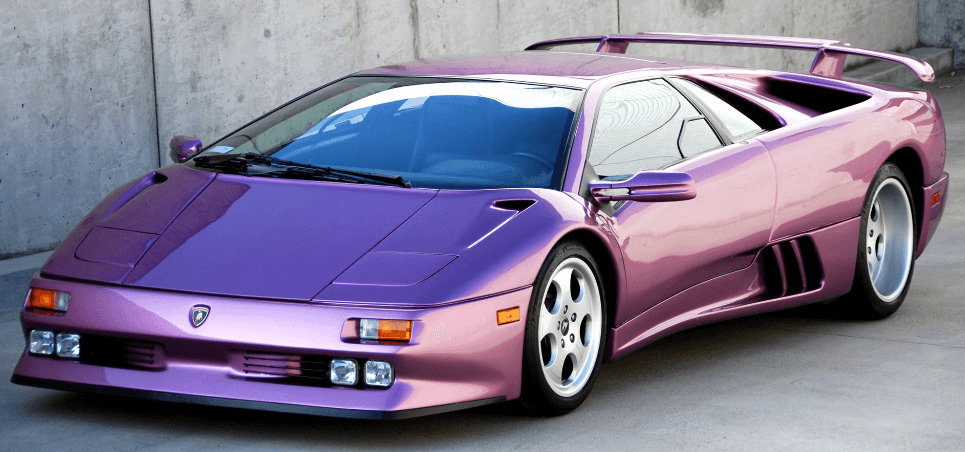
Not the fastest or the most valuable, and on more bedroom walls in the 1990s than anything else here.
Launched in 1990 as the Countach’s replacement, the Diablo used a 5.7-liter V12 making 492 horsepower and became the first Lamborghini to exceed 200 mph. Scissor doors, an impossibly wide stance, and usually photographed in a purple that has become inseparable from the car.
If you were a teenager in that decade, this is probably the poster you had.
What these cars have in common
Looking across the list, the pattern is consistent, and it is not horsepower.
Each one did something first. The first mid-engine supercar, the first production fuel injection, the first carbon monocoque, the first 250 mph road car. Being fastest is temporary. Being first is permanent.
Each one was built with a singular vision. The McLaren F1 and the Miura both came from small teams left alone to do what they thought was right. That is very hard to replicate at scale, which is why so few modern cars join this list.
Each one is rare. Three dozen 250 GTOs, 106 McLaren F1s, 400 Enzos. Scarcity turns admiration into obsession.
Each one has a story. Ford versus Ferrari, a chassis shown at Turin without a body, a Swedish startup taking a world record. The engineering gets you into the conversation, and the story is what keeps the car in it.
If you want the modern equivalents, our roundup of today’s most wanted dream cars covers what has taken their place, and our tour of Jay Leno’s collection shows what happens when someone actually buys them. For dream cars at a price a normal person can reach, try sports cars under $50,000.
Common questions
What is the most expensive car on this list?
The Ferrari 250 GTO, comfortably. Private sales have been reported above $50 million, making it the most valuable car in the world.
Which was the fastest?
The Koenigsegg Agera RS, at a two-way average of 277.9 mph. The McLaren F1 held the record for far longer, and did it without turbocharging.
Why is the McLaren F1 ranked first?
Because it was uncompromised. It held the naturally aspirated production speed record for decades, introduced the carbon monocoque to road cars, and won Le Mans outright against purpose-built race cars.
Can you still buy any of these?
All are out of production, and all trade privately or at auction for sums ranging from several hundred thousand dollars for a Diablo to tens of millions for a 250 GTO.
What makes a car a dream car rather than just a fast one?
Doing something first, being built with a clear singular vision, being rare, and having a story worth retelling. Speed alone has never been enough.

Sources:
- https://www.refined-marques.com/why-the-ferrari-250-gto-is-a-living-legend-of-motorsport/
- https://www.lamborghini.com/en-en/history/miura
- https://www.astonmartin.com/en-us/models/past-models/db5-db5-convertible
- https://www.lamborghini.com/en-en/history/diablo
- https://www.porsche.com/international/models/911
- https://auto.ferrari.com/en_EN/sports-cars-models/past-models/enzo
- https://corporate.ford.com/articles/history/ford-gt40-origins.html