Holden Commodore and Chevy SS: The Australian Muscle Sedan Nobody Bought
For four model years, Chevrolet sold a rear-wheel-drive sedan with a Corvette engine, a limited-slip differential, and an available manual gearbox. It cost less than a loaded Camaro. Almost nobody noticed, and that is the whole story of the Chevrolet SS.
Updated: August 13, 2026 // Car Evolutions
Home // Car Evolutions //
The car was Australian. Underneath the Chevy badge sat the VF Holden Commodore, built in Elizabeth, South Australia, and shipped halfway around the world to a market that had largely stopped buying sedans. It ended in 2017, and the used market has been quietly correcting Chevrolet’s mistake ever since.
Where the Commodore came from
Holden had been building the Commodore since 1978, and by the VE and VF generations it had become something unusual: a large, rear-drive family sedan developed almost entirely in Australia, offered with everything from a V6 in the base Evoke to the 6.2-liter LS3 in the Commodore SS.
Australia had a market for this. Family sedans raced in the Supercars championship, Holden versus Ford was a genuine cultural rivalry, and buyers would order a V8 in a car they used for school runs. The Commodore lineup reflected that. The SV6 sat in the middle with a choice of manual or automatic, and the SS variants got the V8, either the 6.0-liter L77 in earlier cars or the LS3 from 2015.
Holden also built the Ute, which is the version American enthusiasts still ask about. Same front end as the sedan, short pickup bed out back. It never came to the United States, and the closest America got was the cancelled Pontiac G8 ST.
The Pontiac G8 came first
Before the SS there was the G8, and understanding why it failed explains a lot about why the SS did too.
Pontiac imported the VE Commodore for 2008 and 2009. The G8 GT got a 6.0-liter V8, and the G8 GXP got the LS3 with 415 horsepower and an available six-speed manual, which made it one of the best cars Pontiac ever sold. Then GM went through bankruptcy, Pontiac was shut down, and the G8 disappeared after two model years with a small and devoted following.
Chevrolet brought the formula back four years later. Same factory, same platform philosophy, different badge.
The Chevrolet SS, year by year
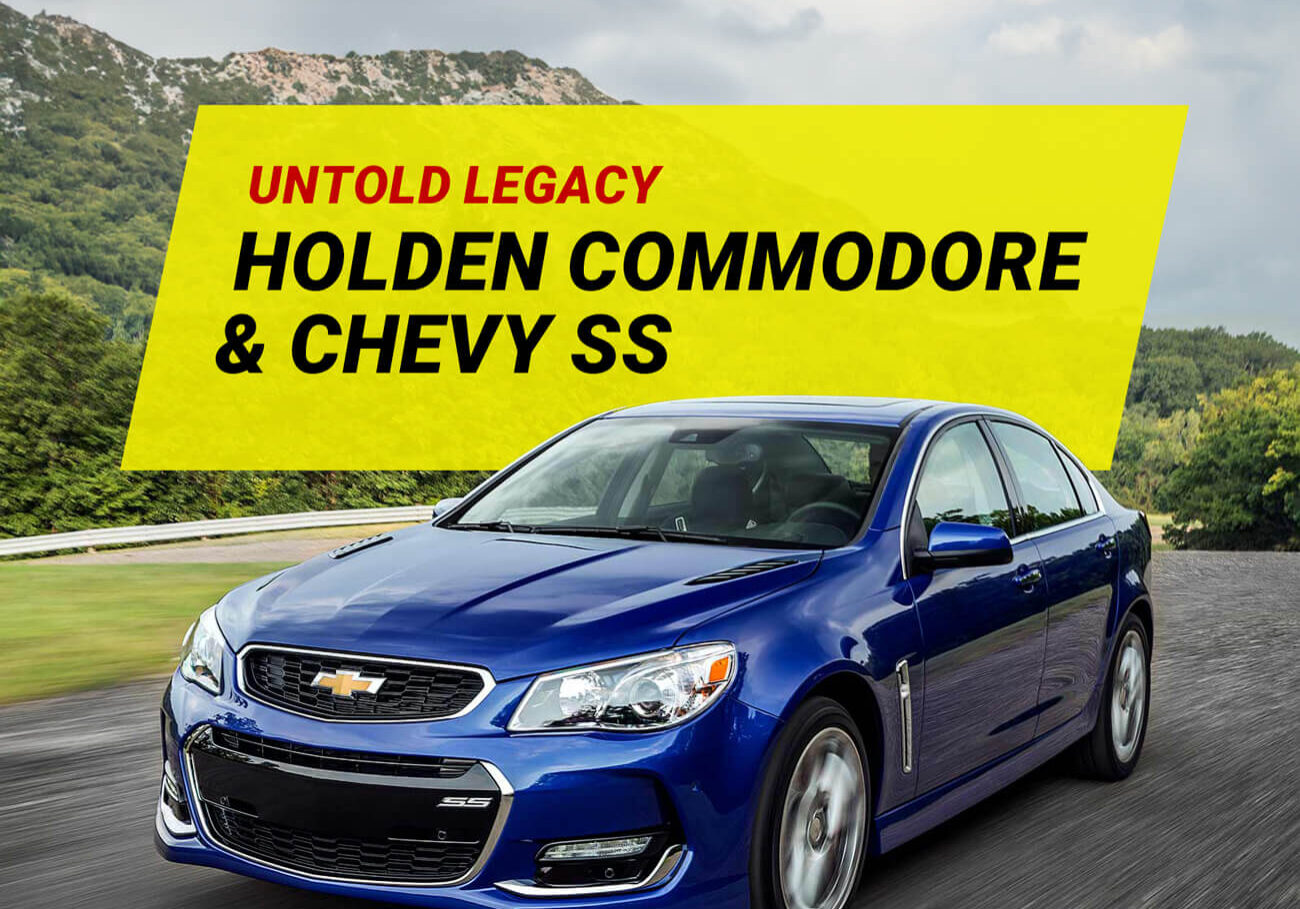
2014. Chevrolet’s first rear-drive V8 sedan in eighteen years arrived with the 6.2-liter LS3 lifted from the C6 Corvette, making 415 horsepower and 415 lb-ft. Rear-wheel drive, a limited-slip differential, Brembo brakes, and a six-speed automatic. There were no trim levels and effectively no option sheet. Every car came loaded, and the only real choices were the sunroof and the spare tire.
2015. The year the car got serious. Chevrolet added a six-speed manual and Magnetic Ride Control, which is remarkable equipment for a sedan positioned between the Malibu and the Impala.
2016. A facelift brought LED lighting, a redesigned front end, a dual-mode exhaust, red Brembo calipers, and new colors including Slipstream Blue.
2017. The final year, running in parallel with the end of Commodore production. Roughly 12,860 SS sedans were sold in the United States across the entire run.
One detail the spec sheet does not capture: the SS was also Chevrolet’s NASCAR Cup Series body from 2013 through 2017. The car winning on Sunday genuinely shared a name with the car in the showroom, which had not been reliably true in decades.
Why it failed
Not because it was bad. The SS was excellent, and the reasons it sold poorly had nothing to do with the driving.
Chevrolet barely advertised it. There was no marketing push, no dealer training, and no attempt to explain to shoppers why a $46,000 Chevrolet sedan was worth more than a $30,000 Impala. Walk into a dealership and you would find one SS parked next to a row of Malibus, wearing a body most customers could not distinguish from the cheaper car.
The timing was also brutal. American buyers were abandoning sedans for crossovers at exactly the moment Chevrolet asked them to pay luxury money for a plain-looking four-door. Anyone who wanted a fast Chevrolet bought a Camaro, which looked the part.
The invisibility that killed it at the dealership is precisely what enthusiasts now love about it. That is why the SS sits at the top of our list of the best modern sleeper cars and why it keeps turning up in conversations about V8 sleeper sedans.
The end of Holden
The Elizabeth plant closed in October 2017, ending car manufacturing in Australia entirely after Ford and Toyota had already shut their local operations. The Commodore name survived a few more years on the ZB, a rebadged Opel Insignia with front-wheel drive and no V8, which is not really the same car in any way that matters.
General Motors retired the Holden brand completely in 2020. Australia’s Ford versus Holden rivalry, which had run since the 1960s, simply stopped having two sides.
What an SS costs now
Considerably more than most people expect, and more than this page used to say.
The SS has barely depreciated. Recent valuation data puts a 2017 model down only around 13 percent over nine years, and clean examples trade from the high $20,000s into the $40,000s depending on mileage, transmission, and condition. Manual cars command a clear premium. Low-mileage manuals in desirable colors have sold well past $50,000 at auction.
If you are shopping, three things matter more than the odometer:
- Modifications. Many have been tuned or supercharged. Stock, documented cars are worth paying up for.
- Bushings. The rear cradle and differential bushings wear, and the symptoms get blamed on other things.
- Records. These were enthusiast cars driven hard by people who knew what they had. A folder of receipts tells you which kind of owner you are dealing with.
For a wider view of what your money buys in this space, our guide to sleeper cars for any budget puts the SS in context against its rivals, and our roundup of American sleeper cars covers the domestic alternatives.
Final thoughts
The Chevrolet SS is the rare car that failed commercially for reasons that had nothing to do with the product. It was a genuinely great sedan sold badly, at the wrong moment, to a market that was busy buying something else.
Whether it counts as a muscle car is a separate argument, and one that turns on how strictly you define the term. Our piece on whether the Corvette qualifies as a muscle car lays out the definition, and by that standard the SS is closer to the mark than the Corvette is. It was a mass-market family sedan with the biggest engine that would fit.
Which is exactly what Pontiac did in 1964, and exactly what Holden had been doing for forty years by the time anyone in America was paying attention.
Fast facts
- The Chevrolet SS was a rebadged VF Holden Commodore, built in Elizabeth, South Australia.
- Its 6.2-liter LS3 V8 came from the C6 Corvette and made 415 horsepower and 415 lb-ft.
- A six-speed manual and Magnetic Ride Control were added for 2015.
- Roughly 12,860 were sold in the United States across four model years.
- The Pontiac G8 of 2008 and 2009 was the same basic car, one Commodore generation earlier.
- The SS served as Chevrolet’s NASCAR Cup Series body from 2013 to 2017.
- Australian car manufacturing ended when the Elizabeth plant closed in October 2017. The Holden brand was retired in 2020.
Common questions
Is the Chevy SS the same car as the Holden Commodore?
Yes. The SS is a VF Commodore with Chevrolet badging, built in the same Australian factory and shipped to the United States.
What engine is in the Chevrolet SS?
A 6.2-liter LS3 V8 producing 415 horsepower and 415 lb-ft, the same engine used in the C6 Corvette.
Did the Chevy SS come with a manual transmission?
From 2015 onward, yes. A six-speed manual was available, and those cars now carry a significant price premium.
Why is the Chevrolet SS so expensive used?
Low production, a Corvette V8, an available manual, and no modern equivalent. Fewer than 13,000 were sold, and nobody builds a rear-drive V8 sedan at that price anymore.
Was there a Chevy SS ute?
No. Holden built a Commodore Ute in Australia, but it was never sold in the United States under any badge. Pontiac planned a version called the G8 ST and cancelled it.