Is an Automatic Car Wash Better for Your Car?
Probably, yes, if what you're comparing it to is you on a Saturday with one bucket of increasingly brown water and a bath towel from the linen closet
Updated: August 11, 2026 // Questions
Most car people don’t want to hear that though. They want to say that automatic washes are paint-eating machines and a proper hand wash is the only respectable option. That was true in 1985. It’s mostly not true now, and the reason has less to do with car washes than with how badly the average hand wash actually goes.
The thing that scratches your paint isn’t the brush
It’s the dirt.
Clear coat is soft. Road grime is basically fine sand mixed with brake dust, and brake dust is iron. Drag either of those across a panel under pressure and you get scratches, a whole galaxy of shallow ones, which is what people mean by swirl marks. You see them in direct sun as spiderwebbing around the door handles and along the hood.
So the real question is never “brushes or mitt.” It’s *how much grit is trapped between your paint and whatever is touching it, and how hard is that thing being pressed down.* Once you frame it that way, a well-maintained wash tunnel and a careless driveway wash start to look very different from how the internet describes them.
Touchless: safest for paint, worst at cleaning
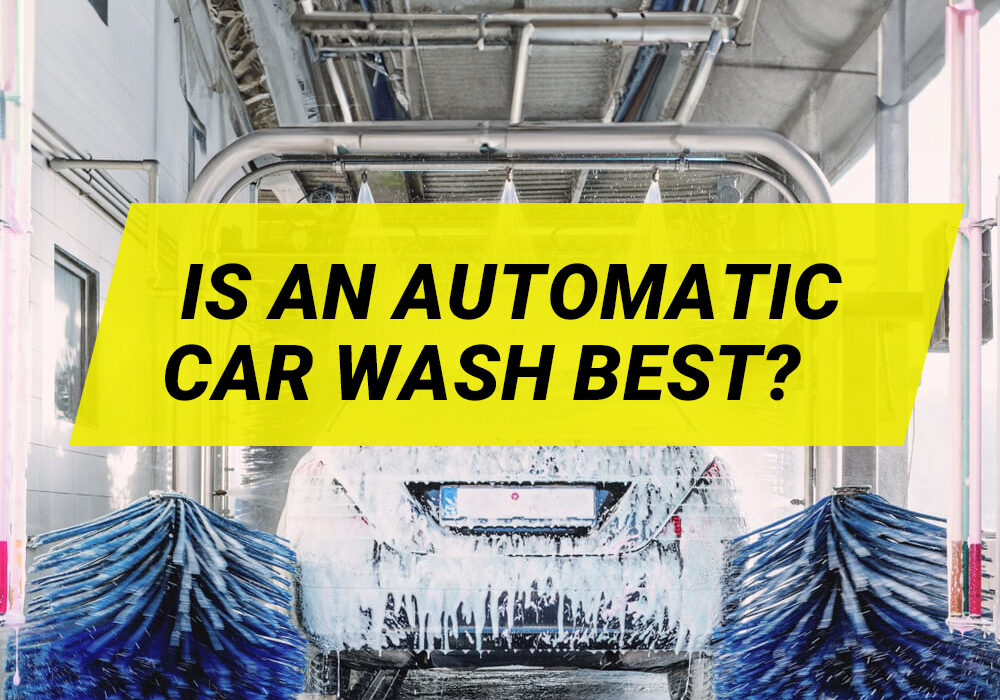
Nothing physically contacts the car. It’s high-pressure water plus chemistry: usually a strongly alkaline presoak to lift organic gunk, then an acidic second pass to cut the mineral film, then a rinse.
The upside is obvious. No contact, no contact scratches. In February, when your car is wearing a crust of road salt, a touchless wash is the best thing you can do for it on a weeknight.
The downside is that pressure and soap alone don’t remove *road film*, that thin, slightly tacky gray layer that builds up on the lower third of a car. Run your hand across a rocker panel after a touchless wash. If it feels faintly gritty or looks hazy in the sun, that’s what’s left. The car is clean. It isn’t *clean* clean.
The other tradeoff nobody mentions: those chemicals are aggressive. Weekly touchless washes will strip a coat of carnauba wax noticeably faster than a pH-neutral soap will.
Soft-touch: better clean, and it depends entirely on the operator
Modern friction washes don’t use the stiff nylon bristles that earned the whole category its reputation. They use closed-cell foam or hanging cloth strips, which don’t hold grit the way old brushes did and flex around mirrors instead of clubbing them.
The catch is that the equipment is only as good as the person maintaining it. Foam that never gets rinsed becomes a grit delivery system. And because you can’t inspect the machinery from the driver’s seat, you’re mostly judging the place by proxy.
What I look for before pulling in:
- Is the tunnel itself clean, or is there sludge built up in the trench?
- Does the car ahead of me come out with dirty streaks down the rear quarter?
- Are the cloth strips a uniform color, or are the tips dark and matted
- Busy is good. High volume means the equipment gets replaced on a schedule instead of when it fails.
A newer express tunnel at a busy location is usually a fine place to wash a normal car. A twenty-year-old in-bay automatic behind a rural gas station is a gamble.
One more thing, and it’s the one that actually costs people money. If you’re running a lift, a light bar, a bed rack, a big wing, or aftermarket mirrors, read the clearance signs and use touchless. Friction equipment is calibrated for factory silhouettes. It will find your roof rack.
Hand washing is the best option and the one most people do wrong
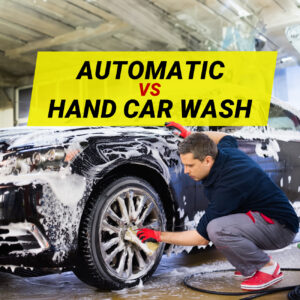
Done right, nothing beats it. Done the way it’s usually done, it’s worse than the tunnel you were avoiding.
The failure points, roughly in order of how much damage they cause:
Drying. This is where most swirls come from, not washing. A bath towel, a chamois, or a shop rag drags whatever you missed across dry paint with your body weight behind it. Use a big plush microfiber drying towel and blot rather than scrub, or better, blow the water off with a leaf blower and never touch the car at all.
One bucket. Every time the mitt goes back in, you’re reloading it with the dirt you just removed. Use two buckets, one soap and one rinse, each with a grit guard in the bottom. Ten dollars, and it’s the single biggest upgrade available to you.
Dish soap. It’s a degreaser. It strips wax and sealant and will dull a finish over time. Use actual car shampoo.
Washing in the sun. Water evaporates before you can dry it and leaves mineral deposits etched into the clear coat. Early morning, evening, or shade.
Top-down order. Wheels and lower rockers are filthiest. Do them first with separate tools, and never let the wheel mitt near the paint.
And one that isn’t about your paint. Driveway washing sends soap, oil, and brake dust straight into a storm drain, untreated. Commercial washes are generally required to