Buying a Used Chevy Camaro: Pros, Cons and the Years That Matter
Chevrolet stopped building the Camaro in January 2024, which changes the used market in ways worth understanding before you shop. The sixth generation is the best-handling pony car anyone built and has the worst visibility of the three. Here is what each generation gets you, the faults that actually cost money, and who should buy something else.
Updated: August 31, 2026 // Pros & Cons
Home // Pros & Cons //
The Camaro arrived in 1967 as Chevrolet’s answer to the Mustang and spent the next fifty-seven years in that argument. It ended in January 2024, when the last sixth-generation car left the Lansing Grand River plant.
That matters if you are shopping. There is no new Camaro to depreciate into the used market, supply is now fixed, and the desirable versions have already stopped falling in value. Our Camaro evolution history covers the full run; this is about which used one to buy.
The generations you are shopping
Fourth generation, 1993 to 2002
The last of the old school, with T-tops, pop-up headlights on early cars, and a live rear axle. The LT1 V8 gave way to the LS1 in 1998, which is the one to want and remains one of the most tunable engines ever put in a cheap car.
Chevrolet then killed the Camaro entirely. There was no Camaro from 2003 to 2009, which catches people out when they are searching by year.
Fifth generation, 2010 to 2015
The retro revival, and the car that brought the nameplate back. It rode on GM’s Zeta platform, the same Australian-developed architecture underneath the Holden Commodore that also became the Chevrolet SS.
It is heavy, at roughly 3,900 pounds, and it drives like it. The V6 made 304 horsepower rising to 323, and the SS used a 6.2-litre V8: the LS3 at 426 horsepower with the manual, or the L99 at 400 with the automatic. Above those sat the supercharged ZL1 from 2012 at 580 horsepower and the track-focused Z/28 in 2014 with the 7.0-litre LS7.
This is the cheapest way into a modern Camaro, and the compromises are real.
Sixth generation, 2016 to 2024
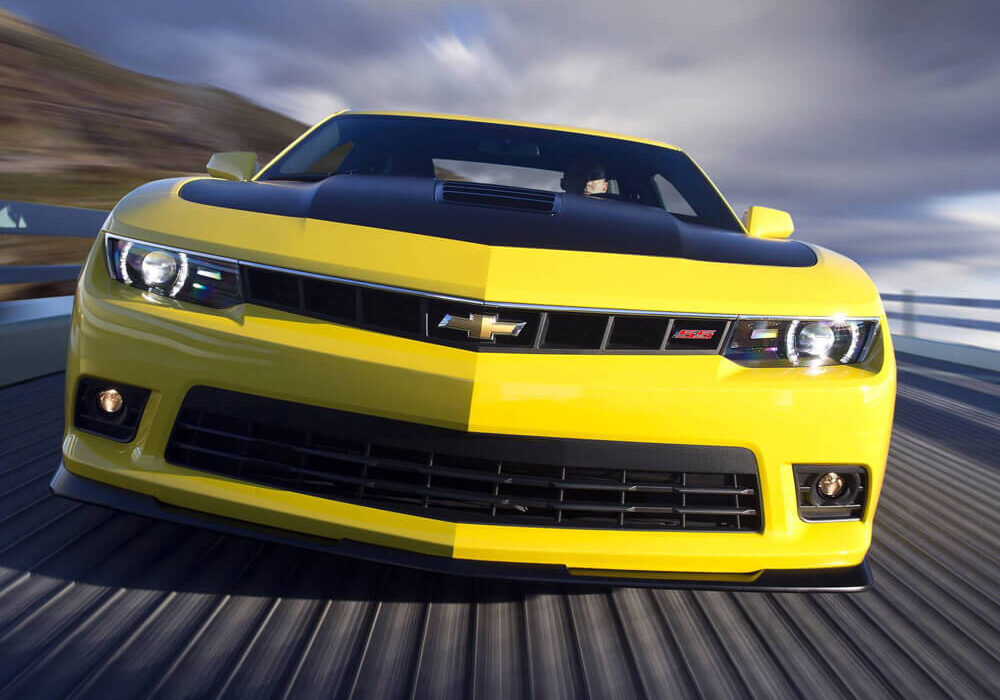
A completely different car. Chevrolet moved it to the Alpha platform shared with the Cadillac ATS, cut around 200 pounds, and produced something that genuinely out-handles a Mustang. Enthusiasts who only know the fifth generation are usually surprised by it.
The range ran from a 275-horsepower 2.0-litre turbo four through a 335-horsepower V6 to the SS with a 455-horsepower 6.2-litre LT1, topped by the supercharged ZL1 at 650. The 1LE package added serious track hardware and was available across most of the range, which makes a 1LE V6 or SS the enthusiast’s value pick.
Worth knowing: the 2019 facelift gave the SS a front end that was so badly received Chevrolet revised it again for 2020. That is a styling question rather than a mechanical one, but it affects resale.
The pros
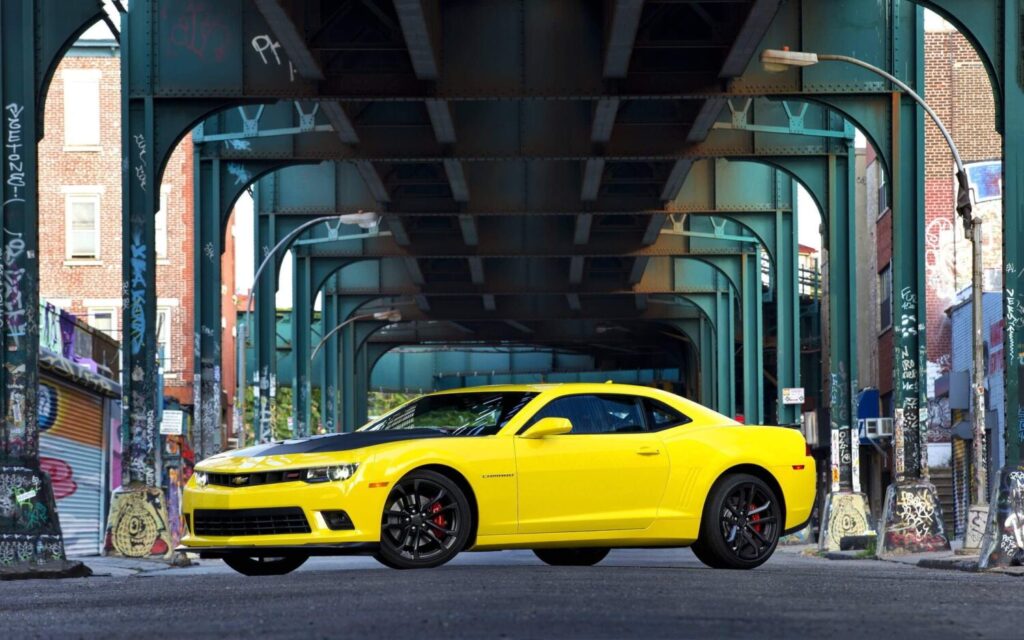
It handles better than its rivals. This is the Camaro’s real argument and it gets lost under the muscle car branding. A sixth-generation SS or 1LE is a properly sorted sports car that will out-corner a Mustang GT and embarrass a Challenger. If you care about roads with bends in them, this is the one.
Performance per dollar. Used SS models deliver 455 horsepower for less than a new hot hatchback costs. The V6 with the 1LE package is quicker than most people expect and cheaper to insure than any V8.
Depreciation has already happened. Somebody else absorbed the worst of it. The exception is the ZL1 and Z/28, which have held value and in some cases started climbing.
Engine choice across the range. A turbo four for running costs, a V6 for balance, a V8 for the noise. Few used cars give you that spread on one body.
Cheap and easy to work on. GM V8s have the deepest aftermarket in existence and any competent shop can service one. Parts are inexpensive and everywhere.
The cons
The visibility is genuinely bad. This deserves more than a passing mention because it is the defining complaint about the modern Camaro. The high beltline and shallow glass create a letterbox effect, the blind spots are enormous, and reversing without the camera is close to guesswork. Drive one before you buy, and park it a few times.
The back seat and trunk are the worst in the class. Both the Mustang and the Challenger beat it. The Camaro’s rear seat is functionally luggage space, and the trunk opening is a narrow slot.
Fuel economy. The V8s drink, and the V6 is not much better in traffic. Only the 2.0-litre turbo returns anything respectable.
Insurance. A V8 coupe prices as exactly what it is, particularly for younger drivers. Get quotes on specific cars before you commit, and read our overview of how premiums are calculated.
Most have been driven hard. The Camaro attracts owners who use the power. Assume the car in front of you has had a life until the records prove otherwise.
Known faults worth checking
The 8-speed automatic shudder. The most important item on this list. GM’s 8L45 and 8L90 automatics, fitted to sixth-generation cars, produced widespread complaints of shuddering and harsh shifting, generally traced to the torque converter and transmission fluid. GM issued service bulletins and it became the subject of litigation. Drive at a steady 30 to 50 mph and feel for a vibration that resembles driving over rumble strips.
Active Fuel Management lifters. The L99 V8 in fifth-generation automatic SS models uses cylinder deactivation, and the associated lifters are a known GM failure point. Listen for a tick and ask whether the lifters have been addressed.
Early V6 timing chains. The 3.6-litre in 2010 and 2011 cars had reported timing chain wear and oil consumption. Check the oil level and the service history on those years specifically.
Modifications. Tunes, headers, superchargers and drag radials all tell you how the car was used. Stock cars with records are worth paying more for.
Which one should you buy?
Best overall: a 2017 to 2023 sixth-generation SS. The Alpha chassis, the LT1 V8, and enough depreciation to make it sensible. Take the manual if you can, which sidesteps the 8-speed question entirely.
Best value: a sixth-generation V6 with the 1LE package. Most of the handling for much less money, and cheaper to insure and fuel.
Best cheap V8: a fifth-generation SS with the manual, which gets you the LS3 rather than the L99 and avoids the AFM lifter issue.
Best daily driver: the 2.0-litre turbo. Enthusiasts will object. It is still a rear-drive coupe that handles well, and it costs a fraction as much to run.
Best long-term hold: a Z/28 or ZL1. Both are limited, both are exceptional, and neither is getting cheaper now that production has ended.
Before you buy
Get a pre-purchase inspection. Not optional on a car this likely to have been used hard. Ask specifically about the transmission and, on V8 automatics, the lifters.
Run the VIN. A history report catches accident damage and title problems for very little money.
Drive it cold. Ask the seller not to warm it up. Cold-start noises and transmission behaviour are where problems reveal themselves.
Negotiate the out-the-door price, not the monthly payment. Our guide to the best places to buy a used car covers where to shop and what to watch for.
Cross-shopping is sensible here. Our Mustang versus Camaro comparison is the direct answer, and the used Mustang guide and used Challenger guide cover the alternatives. In short: the Camaro handles best, the Mustang is the most rounded, and the Challenger is the roomiest and most comfortable.
Common questions
Is the Chevy Camaro discontinued?
Yes. Production ended in January 2024 with the sixth generation. Chevrolet has said the nameplate may return in some form, but nothing has been confirmed.
What is the best year for a used Camaro?
2017 to 2023 for the sixth-generation SS. For value, a fifth-generation manual SS gets you the LS3 V8 considerably cheaper.
Are used Camaros reliable?
Mechanically sound by performance car standards, with two caveats: the 8-speed automatic shudder on sixth-generation cars and the AFM lifters on fifth-generation automatic V8s. Both are checkable before you buy.
Is the Camaro really that hard to see out of?
Yes. It is the single most common owner complaint on the fifth and sixth generations. Sit in one and reverse it before deciding.
Camaro or Mustang?
Camaro if handling matters most. Mustang if you want the better all-rounder, the larger aftermarket and a car still in production. The Camaro’s discontinuation cuts both ways: scarcity supports values, but parts and dealer familiarity favour the Ford long term.
Is the V6 Camaro worth buying?
With the 1LE package, absolutely. It is quick, it handles nearly as well as the SS, and it costs meaningfully less to insure and run.