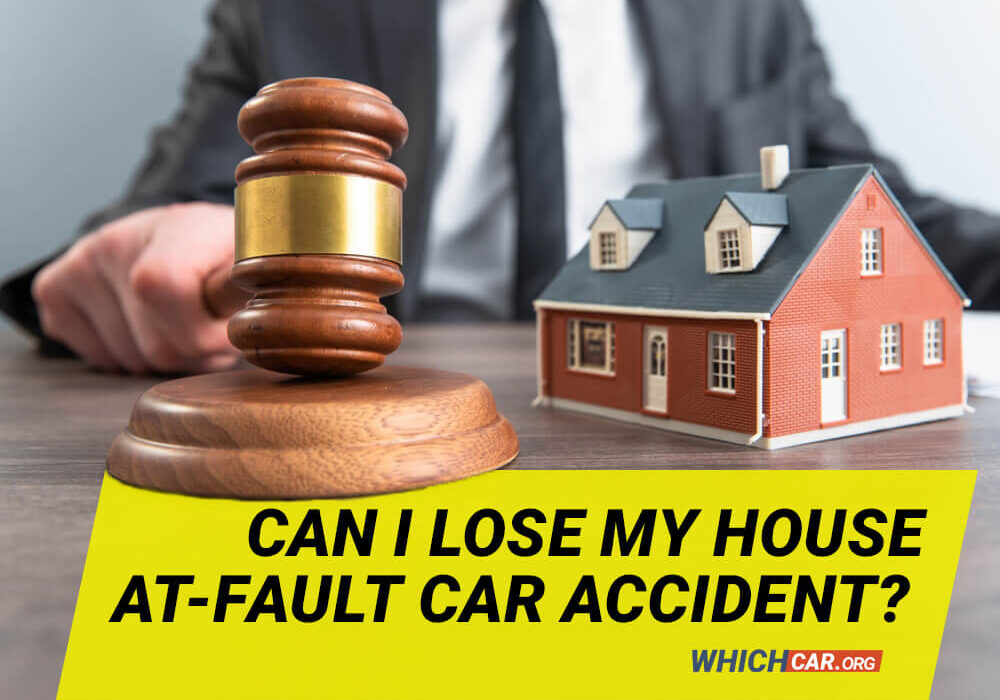
Can I Lose My House Due to an At-Fault Car Accident?
Short Answer: In most cases, no. Your liability insurance pays, the claim resolves, and your home is never in the conversation. The risk appears when damages exceed your coverage limits and the injured party pursues you personally for the difference.
Updated: September 1, 2026 // Questions
It is possible but uncommon, and it depends almost entirely on two things: how much liability coverage you carry, and which state you live in. Most claims settle inside policy limits and never threaten anything you own. The danger sits in the gap between a serious judgment and a thin policy.
Even then, several states protect a primary residence from forced sale to satisfy that kind of judgment. But that protection is narrower and more varied than most articles on this topic suggest, including the earlier version of this one.
How the exposure actually works
Liability coverage pays for injuries and property damage you cause, up to the limits on your policy. Those limits are usually written as three numbers, such as 25/50/25, meaning $25,000 per injured person, $50,000 per accident, and $25,000 for property damage.
State minimums are low, and in a serious injury crash they can be exhausted quickly. A single hospital stay with surgery can pass six figures on its own.
If a court awards more than your policy covers, you are personally responsible for the excess. That is the point at which a plaintiff may look at your assets, which can include savings, wages through garnishment, and in some circumstances real estate.
Two things worth knowing that soften this considerably. Your insurer generally has a duty to defend you, meaning it pays for your legal representation. And the vast majority of claims settle within policy limits rather than going to trial and producing an excess judgment.
Homestead exemptions, accurately
This is where the earlier version of this page overstated things, and it matters because people make decisions on it.
Homestead exemption laws protect some or all of the equity in a primary residence from being seized to satisfy certain judgments. The protection is real, and it varies enormously.
A small number of states offer very broad protection. Florida, Texas, Iowa, Kansas, Oklahoma and South Dakota are the commonly cited examples, and in several of these the protection is unlimited in dollar value. Even there, it is not unconditional: acreage limits typically apply, and the rules distinguish between urban and rural property.
Most states cap it at a dollar figure. Some caps are generous, some are only a few thousand dollars, which offers little protection on a home with real equity.
The exemption does not cover everything. It generally does not stop foreclosure by your mortgage lender, tax liens, or liens from work done on the property. It protects against forced sale by certain creditors, not against every claim on the house.
A judgment can still affect you. Depending on the state, a judgment may attach as a lien against the property even where forced sale is blocked, which can complicate selling or refinancing later.
The practical takeaway is that “I live in a homestead state so I am fine” is not a safe assumption. Rules are state-specific and detailed, and this is exactly the kind of question to put to a lawyer in your state rather than to an article.
What actually prevents this situation
Carry more than the state minimum. This is the single most effective step and it is cheaper than people expect. Moving from minimum limits to substantially higher liability coverage often costs a modest amount per month, because the expensive part of a policy is the first dollar of coverage rather than the last.
Add an umbrella policy. Umbrella coverage sits above your auto and home policies and takes over when those limits are exhausted, typically in increments of a million dollars. It is one of the cheapest forms of insurance available per dollar of protection.
One condition catches people out: umbrella policies require you to carry specified underlying limits on your auto and home policies first. You cannot pair minimum auto coverage with an umbrella and expect it to respond.
Review your limits when your circumstances change. Coverage that suited you when you were renting and had no savings is not the right coverage once you own a home. Our overview of how car insurance works and what it covers goes through the components.
If you are already facing a claim
Notify your insurer immediately. Late notice can jeopardise coverage, and your insurer’s obligation to defend you begins when they know about the claim.
Do not communicate directly with the other party’s attorney. Route everything through your insurer or your own lawyer.
Get your own attorney if the claim exceeds your limits. The lawyer your insurer provides represents you, but their focus is the covered portion. If your personal assets are exposed, you want someone whose only concern is you.
For the coverage side of this, our guide to auto loan and financing options covers what lenders require you to carry, and if you are weighing a claim, our piece on how long after an accident you can claim injury covers the timing rules.
Do not transfer assets to hide them. Moving property to a relative once a claim is foreseeable can be treated as a fraudulent transfer and unwound, and it can make your position considerably worse.
Where bankruptcy fits
Bankruptcy can discharge a judgment from an ordinary negligence claim, which is why it is sometimes raised as a last resort. It carries long-lasting consequences for credit and is a significant legal step rather than a strategy.
Two important limits: debts arising from drunk driving are generally not dischargeable, and neither are those from wilful or malicious conduct. If the accident involved impairment, bankruptcy is unlikely to resolve it.
The short version
Losing a home over a car accident is unusual, and it is largely preventable. The people at risk are those carrying minimum liability limits with meaningful assets behind them, which is a mismatch worth fixing before anything happens rather than after.
Raise your limits, consider an umbrella policy, and if you are actually facing a claim that exceeds your coverage, get a lawyer in your state early.
WhichCar.org is not a law firm and this is general information rather than legal advice. Homestead and liability rules vary significantly by state and change over time. Consult a qualified attorney about your own situation.
Common questions
Can someone take my house after a car accident?
Only if a judgment exceeds your insurance coverage and your state’s protections do not shield your home. It is uncommon, and adequate liability limits generally prevent it entirely.
Does a homestead exemption fully protect my home?
It depends on the state. A handful protect unlimited home equity subject to acreage limits, while most cap the protection at a set dollar amount. Exemptions also do not stop mortgage foreclosure or tax liens.
How much liability coverage should I carry?
More than your state minimum, and enough to reflect what you have to lose. Talk to an insurance agent about limits appropriate to your assets and income rather than defaulting to the cheapest option.
Is umbrella insurance worth it?
For homeowners, generally yes. It is inexpensive relative to the coverage it provides. Note that it requires you to hold minimum underlying limits on your existing policies.
Will my insurance company defend me in a lawsuit?
Typically yes, within the terms of your policy. If the claim exceeds your limits, consider hiring your own attorney as well to protect your personal exposure.
Can bankruptcy erase an accident judgment?
Sometimes, for ordinary negligence. Judgments arising from drunk driving or wilful misconduct generally cannot be discharged.